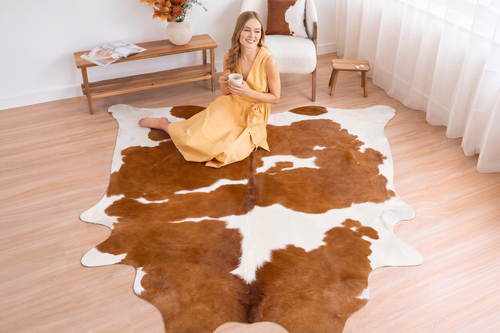
When most people picture a cowhide rug, they picture spots. Black and white patches, brown and white patches, the classic pattern that made the category famous. But a quieter shift has been happening in contemporary interiors: designers reaching for the solid hide. One color, no pattern, all the natural texture.
A monochromatic Cowhide Rug does something a spotted hide can't: it gives a room natural material character without adding a single competing graphic element. For modern, minimalist and tonal rooms, that's exactly the brief. Here's why solid hides are having their biggest moment yet, and how to use one well.
Pure White, Jet Black and Soft Gray: The New Neutrals Taking Over Modern Interiors

For years, "neutral" in rug terms meant beige or grey wool in a flat weave. The solid cowhide has quietly joined that conversation, and it brings something flat weaves can't: a hair-on-hide surface that reads as warm, organic and visibly real. The solid palette in the eCowhides collection covers the full neutral spectrum.
White Cowhide Rugs are the most luxurious solid in the collection. A clean ivory-white hide in a minimal room reads as pure texture: the eye registers the hair surface, the soft edge and the organic shape rather than any pattern. From $799 in Large, up to $1,079 in XXL, it's a premium piece and priced accordingly.
Solid Black Cowhide Rugs are the most graphic solid and the most accessible, starting from $199 in Large. A black hide on a light floor is a strong, clean silhouette: the organic edge becomes the design element. It's also the most forgiving solid for everyday wear.
Grey Cowhide Rugs are the soft modern option, from $299 in Large. Cool enough for contemporary palettes, natural enough to keep the room from feeling clinical. Grey Palomino carries a warmer, more nuanced grey from $229.
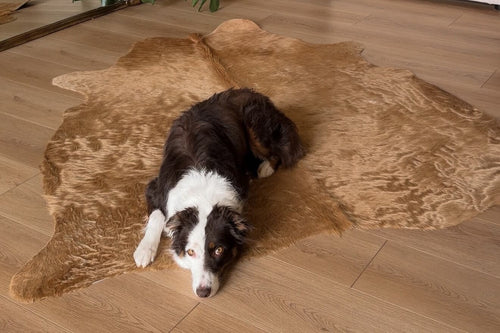
Beige and Champagne are the warm solids. Beige starts from $199 and reads as a soft, quiet neutral. Champagne, from $399, carries a golden light tone that glows against warm wood floors.
The warm browns round out the range: Brown from $159 and Mahogany from $179, both deep, rich and tonal.
|
Solid Hide |
Character |
Best For |
Starting Price (Large) |
|
Solid Black |
Graphic, grounded |
Light floors, minimal rooms, busy households |
$199 |
|
Beige |
Soft, quiet, warm |
Tonal and organic rooms |
$199 |
|
Grey |
Modern, cool-leaning |
Contemporary and Scandinavian palettes |
$299 |
|
Champagne |
Golden, luminous |
Warm wood floors, soft light |
$399 |
|
White |
Pure, luxurious |
Low-traffic, statement minimal rooms |
$799 |
"A solid hide is the cowhide for clients who love the material but not the pattern. You keep the organic edge, the hair texture, the warmth of something real, and you lose the visual noise. In a quiet room, that's the whole point." — Isabel Reyes, Interior Designer, Reyes Studio, San Antonio TX
Texture Without Pattern: Why Minimalists Choose Solid Hides

Minimalism has a texture problem. Strip a room down to clean lines, a restrained palette and a handful of well-chosen pieces, and what's left can feel flat. Without pattern to add interest, texture has to do all the work.
That's the case for a solid cowhide. The hair-on-hide surface has natural variation in length, density and direction, so even a single-color piece has depth. Light moves across it differently through the day. The organic outline breaks up the straight lines of a minimalist room. And because it's a genuine natural material, it brings the warmth that engineered neutrals tend to lack.
The result is a room that stays quiet but doesn't read as cold. The floor has presence without volume. For homeowners who want a calm, edited space and still want something real underfoot, a solid hide is the most natural answer in the collection.
A practical point: solid doesn't mean uniform. Every genuine hide has subtle tonal variation, and no two pieces are identical. A black hide may carry faint brown undertones in strong light; a white hide may shift between ivory and cream across its surface. That variation is the proof of authenticity, and it's what keeps a solid hide from reading as flat. The Real or Faux Guide explains how to read it.
Pairing With Geometric Furniture: Creating Balance in Contemporary Spaces

Contemporary furniture tends to be geometric: straight-edged sofas, rectangular coffee tables, grid-like shelving, sharp-cornered consoles. A rectangular rug under all of that can make a room feel rigid. A solid cowhide solves it by introducing one organic shape into a room of hard lines.
The balance works because the hide is both calm and irregular. It doesn't add pattern to compete with the furniture, but its curved, uneven edge softens the geometry above it. A black hide under a low-profile sofa and a glass-topped table creates a strong, clean contrast. A grey hide under a charcoal sectional keeps the whole composition tonal while the shape does the softening.
A few pairing rules that work:
- Match the hide's undertone to the room's temperature. Cool grey with cool-toned furniture, champagne or beige with warm wood.
- Let the shape be the statement. Keep the rest of the floor plane clear so the hide's silhouette reads.
- Size so the front legs of seating sit on the hide. An undersized solid hide looks like an afterthought. Emily Henderson's Rug Size Guide and the Cowhide Placement 101 Guide cover the proportions.
To carry the idea upward, add texture at sofa level. The Leather Pillow Collection is a natural fit: Onyx beside a black hide, Stone beside a grey one, Sand beside beige or champagne. All three sizes (16x16, 20x20, 12x20 lumbar) work in a tonal arrangement that stays calm but layered.
"In a room full of right angles, the one organic shape on the floor is what makes the space feel lived in. A solid hide does that without adding any pattern, which is why I specify them in contemporary projects more than people expect." — Marco Silva, Senior Interior Designer, Silva + Associates, Miami FL
The Light Game: How White and Champagne Cowhide Behave in Dark Rooms

Light-colored hides do something specific in a dark room: they create contrast and lift. In a space with deep walls, dark wood or low natural light, a white or champagne hide reads as a pool of brightness on the floor. The eye goes to it, and the room gains a focal point that dark finishes alone can't provide.
Champagne is particularly strong here because of its warmth. Against navy, forest green or charcoal walls, the golden tone catches lamplight and makes the whole space feel richer rather than just brighter. White does the same with a crisper, more graphic effect: a luminous shape against a moody palette, like a sheet of light on the floor.
A few notes on getting it right:
- Layer your lighting. Warm lamps at seating height make light hides glow in the evening.
- Keep the rest of the palette tonal. A light hide in a dark room is the star, so let it be.
- Choose the room carefully. A light hide in a dark, low-traffic reading room or bedroom is a stronger fit than one in a muddy entry.
The Rug Color Guide at Chris Loves Julia is a useful reference when you're matching a light hide to a deep wall color.
Keeping It Pristine: The Maintenance Reality for Light-Colored Hides

Here's the honest version. Light-colored hides show dirt more readily than dark ones, and white shows it most. That's a fact of color, not of material. It doesn't mean a white or champagne hide is hard to own, but it does mean choosing the right room and keeping a light routine.
What helps:
- Put light hides in lower-traffic rooms. Bedrooms, living rooms, reading corners and dining rooms with a no-shoes habit are ideal. A muddy back entry is not.
- Shake it out weekly. The non-porous hair-on-hide surface keeps debris on top, so most of it falls out with a firm shake.
- Blot spills immediately. Press with a clean, dry cloth and lift. Never rub. Spills sit on the surface, which gives you a real window to respond.
- Spot clean gently. A barely damp cloth with mild soap, working in the direction of the hair, then air dry. No steam cleaning, no soaking.
For heavier-use homes, a solid black, brown or mahogany hide offers the same monochromatic look with far more tolerance for everyday life. And if you love the light look but have pets or kids, a hide with some tonal complexity, like Beige, is a more forgiving choice than pure white. The full protocol is in the eCowhides Cleaning and Care Guide, and BHG's Cowhide Cleaning Guide adds scenario-specific tips.
"I tell clients the same thing about white hides: put them where life is calm and they'll look new for years. The mistake isn't buying white, it's putting it in the one doorway the whole family uses. Match the color to the room and the maintenance stays easy." — Rachel Simmons, Interior Designer, Simmons & Co., Austin TX
FAQ: Monochromatic Edition

What Is a Monochromatic Cowhide Rug?
A solid-colored genuine cowhide with no spotted pattern, such as white, black, grey, beige, champagne, brown or mahogany. It keeps the natural hair-on-hide texture and organic shape of a cowhide in a single tone, which suits modern and minimalist rooms.
Are Solid Cowhide Rugs in Style?
Yes. Designers increasingly choose solid hides for contemporary, minimalist and tonal interiors because they bring natural texture without competing patterns. They sit comfortably alongside the broader move toward natural materials in the home. The 2026 Interior Design Trends post covers the wider picture.
What Colors Do Solid Cowhide Rugs Come In?
The eCowhides collection includes White, Solid Black, Grey, Grey Palomino, Beige, Champagne, Brown and Mahogany, among others. Each hide is individually photographed, so you see the exact piece you're buying.
How Much Does a Solid Cowhide Rug Cost?
It depends on color and size. Brown starts from $159, Solid Black and Beige from $199, Grey from $299, Champagne from $399 and White from $799 in Large. Larger sizes cost more. Browse the Cowhide Rug Collection for current pricing by color.
Does a White Cowhide Rug Stay White?
With sensible placement and basic care, yes. The non-porous surface keeps debris on top where it shakes out, and spills can be blotted before they set. White hides suit lower-traffic rooms best. Natural tonal variation across the hide is normal and is a sign of genuine material.
Which Solid Cowhide Is Best for High-Traffic Areas?
Solid Black, Brown and Mahogany are the most forgiving solids for busy households. For even more visual forgiveness, multi-tonal patterns like Brindle and Tricolor hide wear best.
Can a Solid Cowhide Work in a Minimalist Room?
It's one of the best fits. A solid hide adds texture, warmth and an organic shape without introducing pattern, so the room stays calm and edited while still feeling natural and layered.
What Furniture Pairs Best With a Solid Cowhide?
Geometric, clean-lined furniture benefits most. The hide's organic outline softens straight edges, while its single tone keeps the composition quiet. Match undertones: cool grey with cool-toned pieces, champagne or beige with warm wood, black with almost anything.
Do Light Cowhide Rugs Work in Dark Rooms?
Yes. A white or champagne hide creates contrast and a focal point against deep walls and dark wood. Warm lighting at seating height makes it glow in the evening. Choose a calmer, lower-traffic room for the best long-term look.
How Do I Clean a Solid Cowhide Rug?
Shake it out weekly, blot spills immediately without rubbing, and spot clean with a barely damp cloth and mild soap, working with the direction of the hair. Air dry at room temperature. Never steam clean or soak it. The eCowhides Cleaning and Care Guide has the full protocol.
One Color. All the Character.

A solid cowhide proves that natural material doesn't need pattern to make a statement. One tone, a hair-on-hide surface, an organic edge: that's enough to give a modern room warmth, texture and a focal point. Choose the color for your room's temperature and traffic, and it will look right for decades.
Browse White, Black, Grey, Beige and Champagne at eCowhides.com. Every piece one of a kind. Every piece genuine.