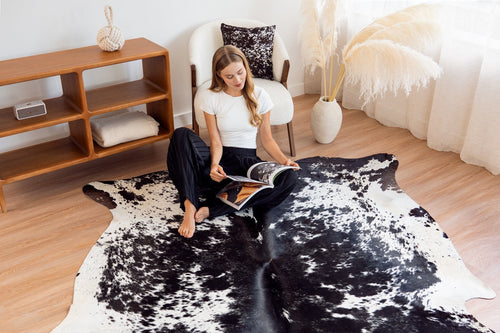
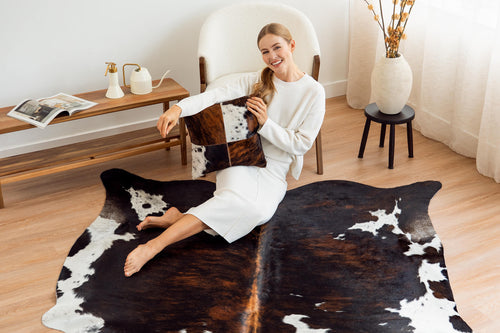
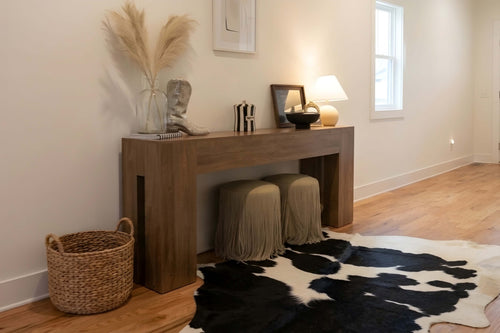
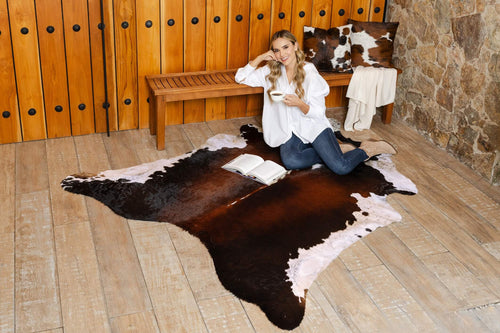
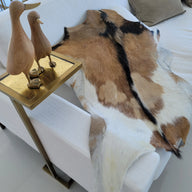
You know that feeling when you walk into a room and something just clicks? The furniture sits right, the proportions feel balanced, everything flows like someone who actually knows what they're doing designed the space. Nine times out of ten, it's not some wild paint color or expensive light fixture making that magic happen—it's how the rug anchors everything together.
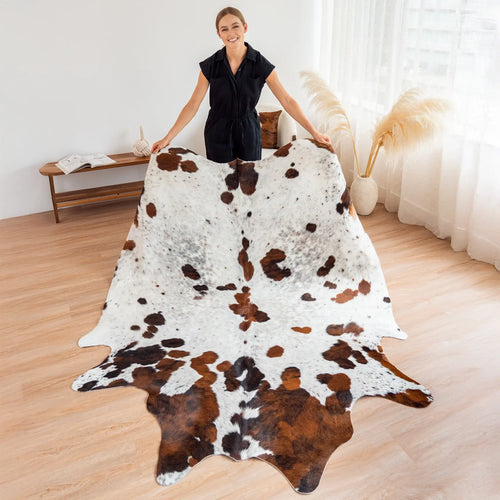
And when you're working with a Cowhide Rug? Friend, you've got yourself one of nature's most versatile design tools. These beauties aren't your standard rectangles you unroll and forget about. Each Natural Hide has its own shape, its own character, its own story. Which means Cowhide Rug Placement isn't just about following some old rulebook—it's about understanding proportions, playing with negative space, and letting that gorgeous organic shape work its magic.
So let's talk about doing this right. Whether you're figuring out Modern Farmhouse Rug Placement or trying to nail Cowhide Rug Bedroom Placement for that king-size bed, I've got you. This is your complete guide to making sure that gorgeous Natural Hide doesn't just sit pretty on your floor—it transforms your entire space.
Size Matters: The 8-Inch Rule for Balanced Cowhide Placement

Here's the thing about Interior Design Rug Tips that stick: they're usually pretty straightforward. The 8-inch rule is simple as they come, but lord, does it make a difference.
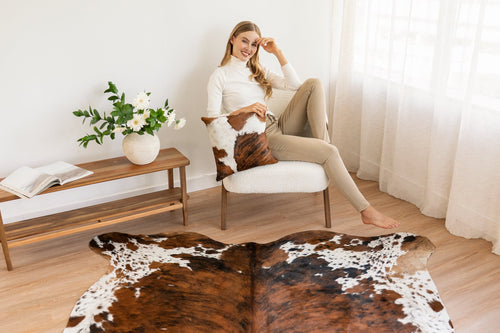
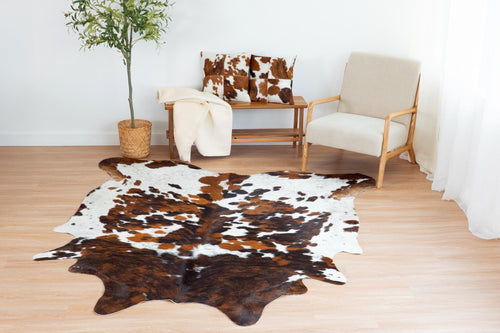
When you're Choosing Cowhide Rug Dimensions, you want to leave between 8 inches and 2 feet of visible floor around your rug's edges. Think of it like matting a photograph—that border creates breathing room. It tells your eye where to land. Without it, your rug feels crammed in, like it's trying to escape.
Now, you might be thinking: "Won't that make my rug look smaller?" Actually, no. Here's the wild part—when you give a Cowhide Rug room to breathe, it reads as more intentional, more designed, more expensive. Wall-to-wall is what you do when you're hiding bad floors. When you've got beautiful Natural Hides from eCowhides, you want folks to see them as the statement pieces they are.
Let's break down Small Room Cowhide Rug Hacks: In tight spaces, stick to that 8-inch minimum. More generous rooms can handle 12 to 18 inches. And in really grand spaces—think loft-style living rooms or open-concept layouts—you can push it to 2 feet. That breathing room actually makes spaces feel bigger, not smaller. Same principle as leaving margins on a page: white space creates clarity.
"The most common mistake I see is people cramming rugs into spaces without considering the negative space around them. That border of floor is just as important as the rug itself—it's what creates visual balance." — Kelly Wearstler, Interior Designer
Here's a pro move for Balancing Room Proportions With Hides: center your rug, not your furniture. Most people anchor everything to their sofa or bed and wind up with a lopsided look. Instead, find the actual center of your room (or the zone you're working with), place your Cowhide there, and then arrange furniture around it. The symmetry grounds everything.
Shape Your Space: Matching Cowhide Silhouettes to Room Function

One of the coolest things about Natural Hides is they come in different shapes—and I don't just mean the organic, unpredictable outline of a full hide. You've got options. And each shape has a sweet spot where it really shines.
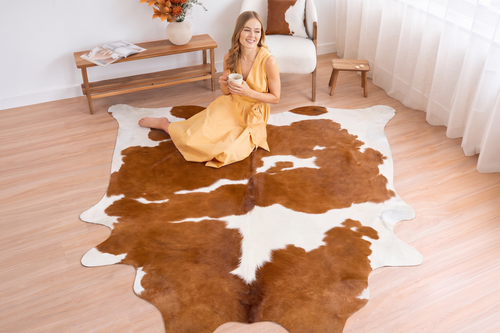
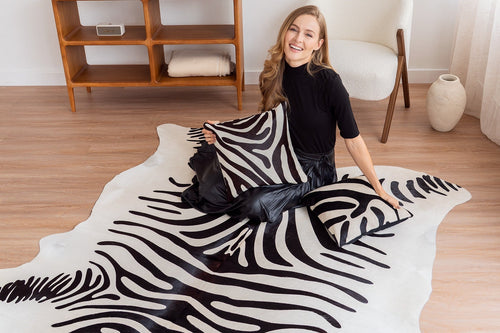
Full Natural Hides are your classic statement makers. These are the irregular, organic shapes most folks picture when they think "Cowhide Leather." They work beautifully for Cowhide Rug In Living Room Ideas because that asymmetry adds visual interest without overwhelming everything. You're not trying to match some perfect rectangle—you're celebrating the fact this hide came from an actual animal, with all its natural variation.
For Irregular Rug Styling Tips, think about orientation. You wouldn't hang a painting crooked, right? Same idea here. Even though the hide is naturally asymmetric, position it so the longest axis runs parallel to your main furniture piece—usually your sofa or bed. This creates a visual anchor. The hide might be wild and organic, but your Cowhide Rug Layout should still feel deliberate.
Round or Near-Round Hides are perfect for creating cozy, defined zones. Think reading corners, breakfast nooks, or that awkward spot by the window where you keep meaning to put a chair. A circular shape naturally draws the eye inward, making it ideal for intimate seating. Plus, there's something inherently friendly about a round rug—it softens angular furniture and makes hard edges feel more inviting.
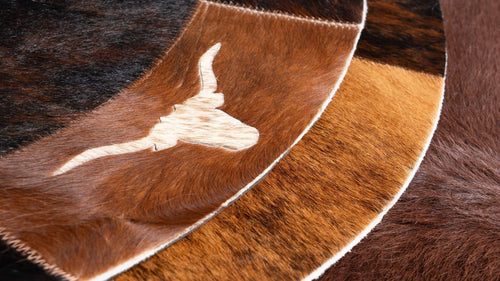
Rectangular or Runner Shapes (like Patchwork Cowhides stitched into geometric forms) are your workhorses for hallways, entryways, and narrow spaces. They guide the eye and foot traffic in a specific direction. When dealing with high-traffic areas, you want something that creates a visual pathway without becoming a tripping hazard. Runners nail this.
"Natural materials like cowhide bring a sense of authenticity you simply can't fake. The key is respecting their organic nature while still maintaining design discipline." — Nate Berkus, Interior Designer
Quick reference for matching hide shapes to spaces:
|
Hide Shape |
Best For |
|
Full Natural Hide |
Living rooms, bedrooms, offices — anywhere you want Focal Point Rug Styling |
|
Round/Near-Round |
Reading nooks, breakfast areas, circular seating zones |
|
Rectangular/Runner |
Hallways, entryways, galley kitchens, alongside beds |
Perfect Placement: Room-by-Room Cowhide Positioning Rules

Alright, let's get tactical. Every room has its own demands when it comes to Cowhide Rug Placement, and what works in your living room absolutely won't work in your dining room. Here's your room-by-room breakdown.
Living Room: Anchor the Conversation Zone
For Cowhide Rug In Living Room Ideas, position your hide under your coffee table with at least the front legs of your seating touching the rug. This is classic territory for that Furniture Float Vs. Furniture On debate, and here's the truth: in living rooms, you want connection between the rug and your seating to define the conversation area. If all your furniture is floating off the rug like it's scared to commit, the space feels disconnected.
Ideal approach: Cowhide Rug Under Coffee Table, with your sofa and chairs positioned so front legs rest on the hide. Back legs can be off—that's fine. This creates cohesion without needing some enormous rug that swallows your floor.
Bedroom: Go Big or Go Strategic
Cowhide Rug Bedroom Placement is all about proportion. For a king-size bed, you want a hide extending at least 18 to 24 inches beyond the sides and foot of the bed. For a queen, 12 to 18 inches works. You're aiming for that luxurious feeling when you step out of bed in the morning—your feet should hit Soft Natural Hide, not cold hardwood.
Here's How Do I Choose The Right Size Cowhide Rug For A King-Size Bed Versus A Queen: measure your bed frame, add at least 18 inches on each side and at the foot, and shop accordingly. A standard king is 76 x 80 inches, so you're looking for a hide around 7 to 8 feet in its longest dimension. For a queen (60 x 80 inches), a 6 to 7-foot hide usually does the trick.
Alternative move: If you've got a smaller hide, run it perpendicular at the foot of the bed like a bench runner. Creates a layered, boutique-hotel vibe without requiring a massive piece.
Dining Room: Size for Chairs-Out
This is where folks mess up constantly. When Placing Cowhide Under Dining Table, you need to size for chairs pulled out, not pushed in. Measure your table, then add 24 to 30 inches on all sides. Yes, your rug will be significantly larger than your table. No, that's not wasteful—it's functional.
Can A Cowhide Rug Be Placed Under A Heavy Dining Table Without Damaging The Hide? Absolutely. Cowhide is tough—it's literally designed to protect a 1,500-pound animal. Just make sure you're using quality hides (like from eCowhides) and avoid dragging furniture. Lift and place.
Office: Under the Desk or Define the Zone
Cowhide Rug Office Decor works beautifully because it adds warmth to what's usually a utilitarian space. For Cowhide Rug Under Desk Ideas, position the hide so your chair sits fully on it when you're working. This protects floors from chair wheels and gives you a defined work zone. If your home office doubles as a guest room, use the hide to visually separate the "work" area from the rest.
Hallway: Mind the Edges
What Is The Best Way To Place A Cowhide Rug In A High-Traffic Hallway To Avoid Tripping Hazards? Keep it centered, use Non-Slip Rug Pads For Cowhide underneath, and make sure edges don't curl up. If your hide has a pronounced neck or tail section, orient it so the longest part runs parallel to the hallway—minimizes awkward edges sticking into traffic flow.
The Layered Rug Look: Styling Cowhide with Jute, Sisal, and Neutrals

Alright, let's talk about one of my favorite tricks: Cowhide Rug Layering. This is where you take your Natural Hide from "nice" to "wow."
Is It Okay To Layer A Cowhide Rug Over A Larger Jute Or Sisal Rug? Not only is it okay—it's encouraged. Layering adds depth, texture, and visual interest. It's the difference between a room that looks staged and a room that feels lived in.
Here's how to do it right: Start with a large, neutral base rug—jute, sisal, or flat-weave wool in cream, gray, or beige. This rug should follow traditional sizing rules for your space (extending under furniture, leaving that 8 to 24 inches of floor exposed). Then layer your Cowhide on top, positioned either centered or offset for a more casual, collected look.
"Layering rugs is like layering necklaces. You need contrast in texture and scale, but they should still feel like they belong to the same aesthetic family." — Jeremiah Brent, Interior Designer
The key to successful layering:
Contrast texture, not color. If your base rug is nubby jute, your Cowhide brings smooth, glossy contrast. If your base is flat-weave, your Cowhide adds dimension. Don't overthink color matching—natural materials almost always play nicely together.
Scale matters. Your base rug should be significantly larger than your Cowhide. Think of the base as the foundation and the Cowhide as the statement piece. If they're too similar in size, it reads as a mistake, not a choice.
Placement precision. You can center your Cowhide on the base rug for a formal look, or offset it toward one side for a more relaxed vibe. Both work, but commit to one—halfway between centered and offset just looks indecisive.
For How To Layer Cowhide Over Carpet, same principles apply. Just make sure your carpet isn't so plush the Cowhide gets lost in it—low-pile or commercial-grade carpet works best as a base.
Furniture Float vs. Furniture On: The Cowhide Placement Debate Solved

This is the question that keeps people up at night: Should The Furniture Legs Sit Entirely On The Cowhide Or Just Touch The Edges?
Short answer: depends on the room. Long answer: let me break it down.
Living Rooms: Front Legs On, Back Legs Off
This is the sweet spot for most living room layouts. Your sofa, chairs, and coffee table all have front legs resting on the Cowhide, while back legs sit on bare floor. This creates cohesion (everything's connected) without requiring a rug so massive it eats your room.
It's the Goldilocks approach: not too floaty, not too committed, just right. Your rug defines the conversation zone without feeling like wall-to-wall installation. This is the go-to for Cowhide Rug Layout in open-concept spaces where you're creating distinct zones without actual walls.
Bedrooms: Fully Under the Bed
For Cowhide Rug Bedroom Placement, you want the hide extending under the bed itself, not just touching edges. This creates that hotel-luxe moment when you wake up—step out of bed, instant softness underfoot. The bed anchors the rug, and the rug grounds the bed. It's symbiotic.
Exception: If you've got a smaller hide, run two matching hides as runners on either side of the bed. Gives you that plush landing zone without needing one giant piece.
Dining Rooms: Fully On, Chairs Out
Placing Cowhide Under Dining Table means all four table legs live on the rug, plus enough space for chairs to pull out without catching on the edge. This isn't optional—it's functional. If your chairs roll off the rug every time someone sits down, you're gonna be annoyed every meal. Size generously.
Offices: Chair Mat Zone
For Cowhide Rug Under Desk Ideas, your desk can float off the rug, but your chair needs to stay fully on it. This is about function (protecting floors from wheels) and aesthetics (defining your work zone). If your hide isn't large enough to accommodate the desk, don't force it—just cover the chair zone and call it good.
Small Spaces: Float Everything
Small Room Cowhide Rug Hacks often involve floating all your furniture off the rug. Use the Cowhide as a pure visual statement in the center, with furniture arranged around it. This keeps spaces feeling open and prevents that cramped, overstuffed vibe. Plus, How Much Floor Space Should Be Visible Around The Edges Of A Cowhide Rug In A Small Living Room? That 8-inch minimum is your friend—don't skimp.
FAQ: Placement Edition

How Do I Choose The Right Size Cowhide Rug For A King-Size Bed Versus A Queen?
For a king-size bed (76 x 80 inches), look for a hide that's at least 7 to 8 feet in length, with enough width to extend 18 to 24 inches beyond each side. For a queen (60 x 80 inches), a 6 to 7-foot hide works beautifully. The goal is creating that barefoot-friendly landing zone when you get out of bed. Measure your bed frame, add 18 to 24 inches on the sides and foot, and shop with those dimensions in mind.
Should The Furniture Legs Sit Entirely On The Cowhide Or Just Touch The Edges?
Depends on the room. In living rooms, aim for front legs on, back legs off—this anchors your seating group without requiring a massive rug. In dining rooms, all table legs and chairs (when pulled out) should sit fully on the rug for smooth functionality. In bedrooms, the bed should rest partially or fully on the hide for that luxe underfoot moment. Small spaces often work best with furniture floating off the rug entirely, using the Cowhide as a pure visual statement.
Is It Okay To Layer A Cowhide Rug Over A Larger Jute Or Sisal Rug?
Absolutely—in fact, it's one of the smartest design moves you can make. Layering adds depth, texture, and that collected, designer look. Use a large neutral base rug (jute, sisal, or flat-weave wool) sized traditionally for your space, then layer your Cowhide on top, either centered or offset. The key is contrasting textures and making sure the base rug is significantly larger than your Cowhide so it reads as intentional, not accidental.
How Do I Orient The Irregular Shape Of A Natural Hide To Complement A Rectangular Room?
Position the longest axis of your hide parallel to your main furniture piece (sofa, bed, or dining table). Even though the shape is organic and asymmetrical, creating this visual alignment makes the placement feel deliberate. Think of it like hanging a painting—you wouldn't tilt it at a random angle, right? Same principle. Let the natural curves do their thing, but maintain that core alignment for visual cohesion.
What Is The Best Way To Place A Cowhide Rug In A High-Traffic Hallway To Avoid Tripping Hazards?
Center the rug along the hallway path, use a quality non-slip rug pad underneath, and make sure edges lie completely flat (no curling corners). Orient the hide so the longest dimension runs parallel to the hallway to minimize protruding edges. If your hide has a pronounced neck or tail, position it so those sections don't stick out awkwardly into the walking path. Function first—if it's a tripping hazard, it's not working.
Can A Cowhide Rug Be Placed Under A Heavy Dining Table Without Damaging The Hide?
Yes. Cowhide is incredibly durable—it's designed by nature to withstand serious wear. Heavy furniture is no problem as long as you're using Quality Hides (like from eCowhides!) and you're lifting furniture to position it, not dragging it. The natural oils in cowhide actually make it resistant to stains and spills, so it holds up beautifully under dining tables where accidents happen.
How Much Floor Space Should Be Visible Around The Edges Of A Cowhide Rug In A Small Living Room?
Aim for that 8-inch minimum, even in tight quarters. Sounds counterintuitive, but leaving breathing room around your rug actually makes small spaces feel larger, not smaller. That visible floor border creates visual clarity and prevents the cramped, wall-to-wall feeling. If you can stretch to 12 inches, even better—but never go below 8 inches or your rug will look shoehorned in.
Does The Direction Of The Rug's "Neck" Or "Tail" Affect The Flow Of A Room's Design?
It can, yeah. The neck and tail are often the narrowest parts of a hide, so positioning them strategically helps maintain visual balance. In bedrooms, I like orienting the tail toward the foot of the bed so the wider shoulder section fills out the sides. In living rooms, position the neck away from your main sightline so you're looking at the fuller, more substantial part when you enter. Small adjustment, big impact on flow.
How Do I Prevent A Cowhide Rug From Sliding On Polished Marble Or Hardwood Floors?
Invest in a quality non-slip rug pad specifically designed for hard surfaces. Look for pads that work on marble, hardwood, and tile—they're usually made from rubber or PVC grip material that keeps your hide locked in place without damaging floors. Avoid cheap mesh pads; they don't grip well and they bunch up. A good pad is invisible but essential. It's the difference between a rug that stays put and one you're constantly adjusting.
Is A Patchwork Cowhide Rug Better Suited For Modern Or Traditional Furniture Layouts?
Honestly? Both. Patchwork Cowhides are chameleons. In modern spaces with clean lines and minimal furniture, the geometric patchwork pattern adds visual interest without clutter. In traditional settings with heavier furniture, the patchwork provides texture and warmth without competing with ornate details. The key is color—stick with neutral tones (blacks, browns, grays, whites) for versatility. Bold multicolor patchwork leans more modern and works best with contemporary furniture.
Your Space, Your Hide, Your Rules (But Follow These)

Look, at the end of the day, Cowhide Rug Placement isn't rocket science. But it is a skill—one that separates spaces that feel thrown together from spaces that feel designed. And now you've got the tools.
You know the 8-inch rule for Natural Hide Proportions. You understand how to match hide shapes to room functions. You can place a Cowhide Rug Under Coffee Table, Placing Cowhide Under Dining Table, or nail Cowhide Rug Bedroom Placement for any bed size. You've mastered Cowhide Rug Layering with jute and sisal, and you can navigate the Furniture Float Vs. Furniture On debate like a pro.
But here's the thing: rules are guidelines, not handcuffs. Once you understand the fundamentals of Styling Natural Hides, you can break them intentionally. You can offset your rug instead of centering it. You can layer three rugs instead of two. You can orient that irregular hide at a slight angle if it creates better flow. The difference between a design mistake and a design choice is intention. And now you've got the knowledge to be intentional.
So here's what I want you to do: grab that measuring tape. Walk through your space. Look at where the light hits, where people naturally walk, where your eye lands when you enter the room. Then position your Hair on Hide with purpose. Give it room to breathe. Let it anchor your furniture. Let it define a zone or layer it over something neutral for that designer depth.
And when someone walks into your space and says, "Wow, this room just works," you'll know exactly why. Because you didn't just throw a rug on the floor and hope for the best. You positioned it like someone who knows what they're doing.
Because you do.
Ready to find the perfect Cowhide for your space? Head over to eCowhides.com and browse their collection of premium Natural Hides. From full irregulars to geometric patchworks, they've got the quality and variety to make your Cowhide Rug Placement vision come to life. And remember—measure twice, position once, and always leave room to breathe.