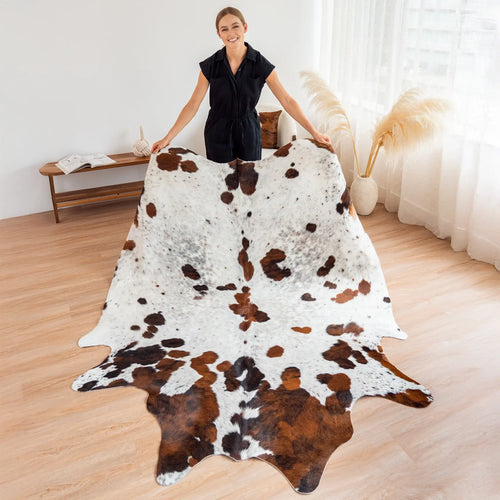
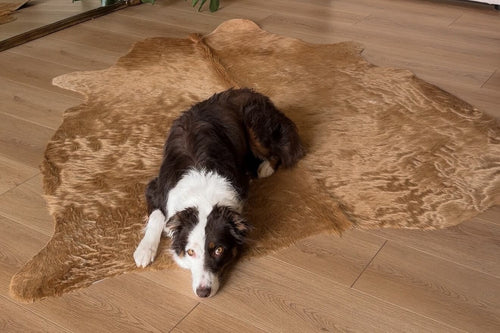
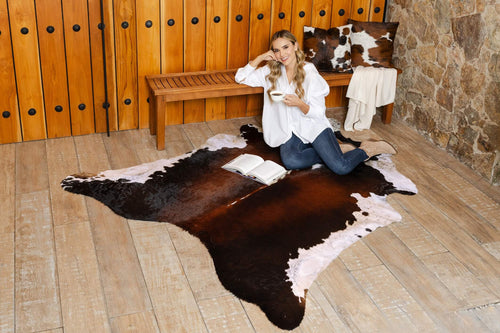
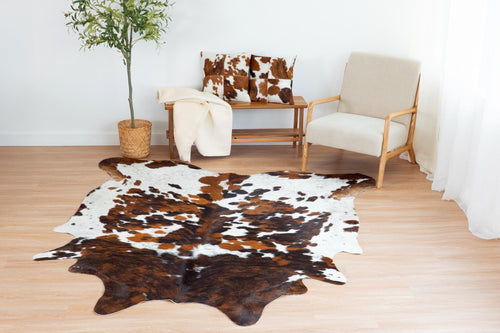
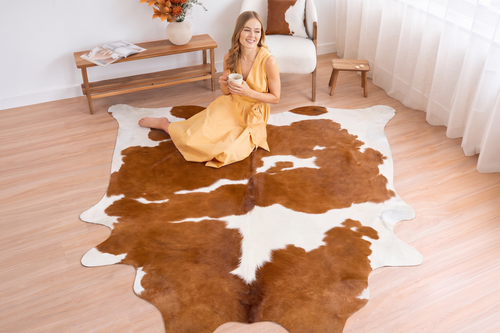
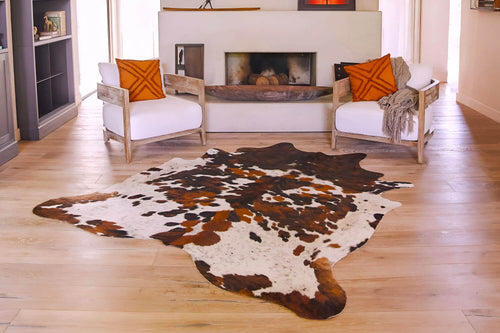
One of the reasons a Cowhide Rug makes such strong sense as a floor covering is the maintenance math. Wool requires professional cleaning twice a year. Synthetic rugs need regular shampooing. Jute and sisal develop odors under moisture exposure and require careful handling. Genuine cowhide needs a weekly shake-out, prompt blotting when spills happen, and the occasional spot clean. That's essentially it.
But "essentially it" isn't the same as "nothing." The habits that keep a cowhide looking right for 30 years are specific — and the habits that damage one are equally specific. This guide covers both completely so you know exactly what to do, and exactly what not to.
The Weekly Routine: What 10 Minutes a Week Actually Looks Like

The weekly routine for a cowhide rug is the simplest in any floor covering category. Here's what it actually involves, in the order you do it.
Step 1 — Shake it out (3–5 minutes). Take the hide outside — over a railing, across a fence, or simply held up and shaken firmly. Loose debris — dust, pet hair, tracked-in material — falls out without any mechanical contact with the hair surface. The non-porous hair-on-hide surface means debris sits on top rather than embedding in fiber, so shaking removes genuinely more than vacuuming does on most days. In high-traffic households or during heavy shedding season with pets, twice weekly is better than once.
Step 2 — Vacuum if needed (2–3 minutes). Not always necessary — if shaking addressed the week's debris, vacuuming adds nothing. When vacuuming is warranted, use a flat suction attachment on low power, moving in the direction the hair naturally lays. Never use a rotating brush head or beater bar — these work against the hair direction and can damage the follicle anchoring in the leather backing over time. Never vacuum against the hair direction.
Step 3 — Quick visual check (1 minute). Run your eyes over the surface. Any areas where the hair has been disturbed against its natural direction? Smooth them with your hand, moving with the hair lay. Any spots that weren't addressed during the week? Note them for spot cleaning. The backing lying flat and the hide not buckling at any edges? Both normal signs that the hide is sitting correctly.
That's the full routine. Ten minutes at most, often less. The BHG Cowhide Cleaning Guide covers additional scenario-specific techniques. The full protocol including everything in this guide is also at the eCowhides Cleaning and Care Guide.
One thing to avoid: Steam cleaning. The combination of moisture and heat damages the leather backing — it can cause the leather to stiffen, crack, or warp, and in severe cases can cause the hair follicles to loosen. This is the single maintenance mistake that causes the most permanent damage to genuine cowhide. No steam mops, no steam cleaners, regardless of how light the application.
"The maintenance routine I give clients for cowhide takes about as long as reading this paragraph. Shake weekly. Blot spills immediately. Spot clean when needed. That's the full protocol for a piece that will last 30 years. The reason wool rugs cost more to maintain isn't that they're harder to clean — it's that their fiber construction makes professional cleaning necessary. Cowhide's surface doesn't accumulate that way." — Rachel Torres, Interior Stylist, Torres Design, Chicago IL
Spills, Accidents and Stains: The Right Response for Every Scenario

This is where the non-porous surface advantage is most decisive. On a fiber rug, a spill moves immediately downward through the pile and into the backing — the cleanup window is measured in seconds. On a genuine cowhide, a spill sits on the surface. The window for effective cleanup is minutes rather than seconds, which changes the entire response dynamic.
The foundational rule for every spill scenario: blot, don't rub. Rubbing spreads the spill laterally and pushes it against the hair direction, potentially working material deeper into the surface and disturbing the hair lay. Blotting lifts the liquid by pressing a clean dry cloth firmly against the spill and then lifting — pressing and lifting, not dragging. Work from the outside edge of the spill inward to prevent spreading.
Water and non-staining liquids (coffee, tea, juice without colorants):
- Blot immediately with a clean dry cloth. Press firmly, lift, reposition the cloth, repeat until no more liquid transfers.
- If any residue remains, barely dampen a clean cloth with plain water and blot gently — working with the hair direction.
- Let air dry at room temperature. Do not use a hair dryer or place near a heat source.
- Once dry, smooth the hair in its natural direction with your hand.
Pet accidents (urine, vomit):
- Act immediately — the non-porous surface gives you a window, but urine's pH can affect the leather backing if left for extended periods.
- Blot up as much liquid as possible with dry cloths. Change cloths frequently — you're lifting liquid, not spreading it.
- Mix equal parts water and white vinegar. Dampen a clean cloth with this solution — barely damp, not wet — and blot the affected area. The vinegar neutralizes urine's ammonia odor at the surface level.
- Follow with a clean water-dampened cloth to remove the vinegar solution.
- Let air dry completely. If any odor persists after drying, repeat the vinegar application.
- Do not soak the area — moisture absorbed into the leather backing is the risk, not moisture on the hair surface.
Food and oily spills:
- Lift any solid material first using a blunt edge — a spoon or the dull side of a butter knife. Work from the outside edge inward.
- For oily or greasy food, sprinkle a small amount of dry cornstarch or baking soda over the affected area and let it sit for 15–20 minutes. The powder absorbs the oil before you attempt any liquid cleaning. Brush off gently working with the hair direction.
- Apply a small amount of pH-neutral dish soap mixed with water to a barely damp cloth — not directly to the hide. Blot gently with the hair direction.
- Follow with a clean water-dampened cloth. Let air dry.
Mud and tracked-in debris:
- Wait. Let the mud dry completely before attempting any cleaning. Trying to clean wet mud pushes it further into the hair surface and makes the job significantly harder. This is the counterintuitive rule that makes mud cleanup easy: patience first.
- Once dry, brush the dried mud off gently working with the hair direction. A soft-bristled brush or your hand works well.
- Vacuum with a flat attachment on low to pick up the remaining dry debris.
- If any staining remains, spot clean with a barely damp cloth and mild soap.
Red wine and dark liquids:
- Blot immediately and aggressively with dry cloths — speed is more important here than with water-based spills.
- Once the liquid is lifted, apply cold water to a clean cloth and blot — cold water, not warm, which can set the tannins in wine.
- If a stain sets despite prompt action, a very small amount of white vinegar on a barely damp cloth, blotted gently, can help lift the remaining color. Test in an inconspicuous area first.
- For severe staining that home cleaning doesn't address, a specialist leather cleaner applied per product instructions is the next step. The Cowhide Rug Cleaning Services guide covers professional care options for situations that exceed home care capacity.
What never to use: Bleach. Ammonia-based cleaners. Harsh chemical solvents. Hot water (always use cold or lukewarm). Any cleaner not tested in an inconspicuous area first. These can strip the natural oils from the leather backing, bleach or discolor the hair surface, and cause permanent damage that no subsequent care will reverse.
Deep Cleaning Without Damaging: What Works and What Destroys a Hide

"Deep cleaning" means different things for different floor coverings. For wool or synthetic rugs, deep cleaning typically means professional shampooing — saturating the fiber with cleaning solution, extracting it, and allowing extended drying time. For genuine cowhide, deep cleaning means something specific and much more conservative.
What deep cleaning actually means for cowhide: A more thorough version of the standard spot cleaning protocol, applied to the full surface rather than a specific area. It's done when the hide looks generally dull rather than specifically stained — when accumulated surface dust and light soiling have reduced the hair's natural sheen.
The process: Take the hide outside. Shake it firmly to remove all loose debris. Using a soft bristle brush or a rubber brush, brush gently through the full hair surface working in the natural direction of the hair lay. This lifts compacted surface debris that shaking doesn't address. Follow with a barely damp cloth wiped gently across the surface — again working with the hair direction. Let air dry completely in the shade — not in direct sunlight, which can bleach and dry out the leather backing over time. Once dry, brush through the hair surface again to restore the natural lay.
That's a full deep clean for cowhide. It doesn't involve water saturation. It doesn't involve cleaning products beyond a damp cloth. It can be done at home in under an hour for any standard-sized hide. The frequency: once a year in most households, twice in very high-traffic or pet-heavy homes.
What destroys a hide:
- Steam cleaning. Heat + moisture penetrating the leather backing causes stiffening, cracking, and can loosen hair follicles. The most common cause of permanent cowhide damage. No steam mops, no steam cleaners, no exceptions.
- Machine washing. The agitation and water saturation of a washing machine overwhelms the leather backing. Genuine cowhide cannot be machine washed — the backing stiffens and warps, the hair surface may separate from the leather, and the hide may never lay flat again.
- Prolonged moisture exposure. A spill that sits unaddressed, or cleaning that involves soaking the hide rather than using a barely damp cloth, allows moisture to penetrate the leather backing. This causes the same stiffening and warping as steam cleaning over time. Address spills immediately, always use minimal moisture in cleaning.
- Direct sun exposure for extended periods. Long-term direct sunlight bleaches the natural hair coloring and dries out the leather backing. A hide near a south-facing window should be rotated periodically — see the next section.
- Harsh chemical cleaners. Strip natural oils from the leather, bleach or discolor the hair surface, and cause the backing to stiffen and crack prematurely. Always use mild, pH-neutral cleaning solutions in minimal quantities.
"The damage I see on cowhide rugs is almost always from one of two things: steam cleaning, or leaving a spill unaddressed for too long. The steam cleaning is the worse one because it's immediate and irreversible. The spill issue can usually be partially remediated. If there's one thing I'd want every cowhide owner to know before it's too late: no steam." — James Holloway, Leather & Material Specialist, Chicago IL
Long-Term Ownership: How a Cowhide Ages and What to Expect After 5, 10, 20 Years

One of the specific properties that makes genuine cowhide worth the investment is how it ages. Unlike fiber rugs that degrade toward a worn-out version of themselves, a well-maintained cowhide ages toward a more refined version of itself. Here's what that progression actually looks like.
After 1–2 years: The hide has fully settled and broken in. Any initial firmness in the leather backing has softened; the hide lays completely flat and has stopped any edge curling that may have been present when new. The hair surface has settled from its out-of-the-box uniform appearance into a slightly more natural lay — this is a positive sign of the material relaxing into its permanent state. The natural sheen of the hair may be very slightly reduced from the original; this is normal and maintenance restores it.
After 5 years: The leather backing is noticeably more supple than when new — it has taken on the quality of well-worn leather rather than new leather. Areas of heaviest foot traffic will show slightly compressed hair, which is normal and addressed by rotating the hide (see next section). The hair surface still looks essentially the same as new with regular maintenance. The natural tonal variation in the coloring may be slightly more visible — individual hair follicles express their colors more distinctly after years of exposure to light and air. This is character development, not degradation.
After 10 years: A well-maintained hide at ten years should look like a beautiful, well-used piece — not like a worn-out one. The leather backing has the suppleness of high-quality aged leather. Areas of normal wear have the distinction of natural patina. The hair surface, maintained with regular brushing and the annual deep clean, retains most of its original appearance. Tonal variation has deepened — the dark tones are richer, the warm mid-tones more saturated. The hide looks like it has a history.
After 20+ years: The benchmark that separates genuine cowhide from every alternative. A properly cared-for hide at 20+ years is a piece with character — the visual complexity of a material that has been present in a home for two decades, that has developed the patina of long ownership rather than the decline of planned obsolescence. The leather backing is completely supple. The hair surface, maintained consistently, still performs its original function. The Cowhide Durability Guide documents what real long-term ownership looks like in practice.
The aging trajectory of genuine cowhide is fundamentally different from the aging trajectory of any fiber rug. Fiber rugs move from new toward worn — the quality direction is always downward. A genuine cowhide moves from new toward settled, then toward character, then toward what antique dealers call patina — the quality that makes old things more interesting than new ones. The Timeless Elegance post covers this material quality in full.
Storage, Rotation and the Habits That Add Years to Any Hide

Beyond the weekly routine and spill response, there are several ongoing habits that meaningfully extend the life and appearance of any hide. None are time-intensive — they're maintenance intelligence rather than maintenance effort.
Rotation. The most important long-term habit. Foot traffic concentrates in specific patterns — the path from the sofa to the coffee table, the entry point into the room, the area where chairs are regularly pulled out. These areas receive more compression and surface wear than adjacent areas. Rotating the hide 180 degrees every three to six months distributes wear evenly across the full surface and prevents the localized compressed appearance that develops when the same areas receive all the traffic. Mark a reminder on your calendar — it takes two minutes and extends the hide's even appearance by years.
Sunlight management. Extended direct sunlight bleaches natural cowhide coloring over time and dries out the leather backing. A hide positioned under a south-facing window in a sun-heavy climate should be rotated more frequently, or a UV-filtering window treatment should be considered. The effect is gradual enough that it's not noticeable month-to-month — but a hide that's been in direct sun for five years will show bleaching in the exposed areas. Indirect or filtered light doesn't cause this.
Non-slip pad. On hardwood or tile floors, a non-slip pad under the hide prevents movement under foot traffic. This matters for safety, but it also matters for the hide's long-term condition — a hide that moves slides against the hard floor surface, which abrades the leather backing over time. The right pad: cut slightly smaller than the hide so it's hidden at the edges, with a surface that grips both the floor and the leather backing without adhesive. The Rug Pad Guide covers pad types for every floor surface.
Leather conditioning (occasional). The leather backing of a genuine cowhide benefits from occasional conditioning — once a year in dry climates, less frequently in humid ones. A small amount of leather conditioner applied to the backing (not the hair surface) with a soft cloth and buffed gently maintains the backing's suppleness and prevents the brittleness that comes from leather drying out over time. Any high-quality leather conditioner works; avoid silicone-based products that leave residue. This is particularly important in homes with forced-air heating systems that reduce indoor humidity significantly in winter.
Storage when not in use. If you need to store a cowhide for an extended period — moving, renovation, seasonal relocation — the correct method prevents the damage that improper storage causes. Roll the hide hair-side in around a clean cardboard tube or pool noodle — rolling rather than folding prevents crease lines in the leather backing. Store in a cool, dry location with air circulation — not sealed in plastic, which traps moisture and causes mold or mildew on the leather backing. Never fold and stack. A breathable canvas bag or cotton sheet wrap is ideal for long-term storage.
Address issues promptly. The longest-lasting hides are owned by people who address problems when they're small. A small stain cleaned immediately is gone in five minutes. A stain that dries and sets takes fifteen minutes and may leave a trace. A curl developing at an edge — caused by moisture imbalance or being positioned near a heat vent — addressed immediately by laying a book on it for 24 hours is resolved. Left for months, it becomes structural. The weekly check is the habit that catches everything early.
FAQ: Cowhide Care Edition

How Do I Clean a Cowhide Rug?
Shake it out weekly for loose debris. Blot spills immediately with a dry cloth — never rub, always work from the outside edge inward. Spot clean with a barely damp cloth and mild pH-neutral soap when needed, working in the direction the hair lays. Let air dry at room temperature. Full protocol at the eCowhides Cleaning and Care Guide and BHG's Cowhide Cleaning Guide.
Can You Steam Clean a Cowhide Rug?
No — this is the single most damaging thing you can do to genuine cowhide. Heat and moisture penetrating the leather backing causes permanent stiffening, cracking, and potential hair follicle loosening. No steam mops, no steam cleaners, no exceptions. Steam cleaning is irreversible damage.
Can You Machine Wash a Cowhide Rug?
No. Machine washing saturates the leather backing and subjects it to agitation — the backing stiffens and warps, the hair surface may separate, and the hide will not lay flat again. Genuine cowhide is not machine washable under any circumstances.
How Do You Get Pet Urine Out of a Cowhide Rug?
Act immediately. Blot aggressively with dry cloths until no more liquid transfers. Apply a solution of equal parts water and white vinegar on a barely damp cloth — blot, don't rub. Follow with a clean water-dampened cloth. Air dry completely. The vinegar neutralizes ammonia odor at the surface level. Repeat if odor persists after drying. Do not soak the area — moisture must stay minimal to protect the leather backing.
How Often Should You Clean a Cowhide Rug?
Weekly shake-out (or twice weekly in heavy-traffic or pet households). Spot cleaning as incidents occur — immediately. Full surface deep clean once a year in most households, twice in very high-traffic or pet-heavy homes. That's the complete frequency schedule for genuine cowhide — significantly less than any fiber rug alternative.
How Do You Fix a Cowhide Rug That Is Curling at the Edges?
Edge curling is typically caused by moisture imbalance (one side of the leather drying faster than the other) or proximity to a heat source. Address it early: lay the hide flat, place heavy books or flat objects on the curling edges, and leave for 24–48 hours. Ensure the hide is completely dry and away from any heat source. For persistent curling, lightly dampen the leather backing in the curling area with a barely damp cloth, lay flat with weight on the edge, and allow to dry completely. A non-slip pad underneath helps prevent recurrence.
How Do You Store a Cowhide Rug?
Roll it hair-side in around a clean cardboard tube — never fold. Store in a cool, dry location with air circulation — not sealed in plastic, which traps moisture. A breathable canvas bag or cotton sheet wrap is ideal. Never store in a humid environment or in direct sunlight. A properly stored hide can be in storage for years without any degradation.
How Do You Keep a Cowhide Rug From Sliding?
A non-slip pad cut slightly smaller than the hide, placed between the hide and the floor. The pad should grip both the floor surface and the leather backing without adhesive. On smooth hardwood or tile, this is essential both for safety and to prevent the backing abrasion that comes from a hide sliding against a hard floor. The Rug Pad Guide covers the right pad type for every floor surface.
How Long Does a Cowhide Rug Last?
20–30 years with basic care — weekly shake-out, prompt spill response, occasional spot cleaning, and the rotation and storage habits described in this guide. The material doesn't degrade toward worn-out the way fiber rugs do; it ages toward character and patina. A well-maintained cowhide at 20 years is a more interesting piece than it was on day one. The Cowhide Durability Guide documents what long-term ownership looks like in practice.
Do Cowhide Rugs Need Professional Cleaning?
No — this is one of the key advantages over wool and most fiber alternatives. The non-porous surface doesn't accumulate at depth, so professional cleaning addresses nothing that regular home care can't handle. The complete care protocol is home-executable. For severe staining that home cleaning doesn't resolve, specialist leather care services exist — the Cowhide Rug Cleaning Services guide covers professional options for extreme cases.
The Piece That Lasts Because You Know How to Care for It

A genuine cowhide rug at 30 years is still going because its owner knew three things: shake weekly, blot immediately, and never steam. The habits aren't complicated — they're just specific. Know them before you need them, practice them consistently, and the piece on your floor outlasts every alternative you could have chosen.
Browse the full collection at eCowhides.com. The care guide is at the eCowhides Cleaning and Care Guide. Bookmark both — one for finding the piece, one for keeping it.