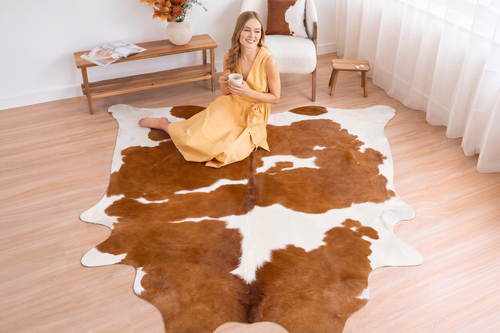
Most living rooms don't have a furniture problem. They have a floor problem. The sofa is right, the lamp is right, the art is right, and yet the room still feels like a showroom, a collection of good pieces that haven't been introduced to each other yet.
I've watched a single Cowhide Rug fix that more times than I can count. It adds warmth, texture, and an organic shape the rest of the room can rally around. But the difference between a hide that looks designed and one that just looks dropped is in the details: size, placement, and what you build around it. Here's the complete layered look.
Why the Living Room Is Where a Cowhide Rug Makes Its First Impression

The living room is the one space in the house where everything is on display and everything gets used. Guests sit there, kids sprawl there, and the whole room is read at a glance from the doorway. That makes the floor the most important surface in the space, and the one most often left to chance.
A natural hide does three things at once. It anchors your seating, turning scattered furniture into a defined zone. It adds warmth through genuine natural color. And it brings texture and shape, since no two hides are alike and the organic outline softens the straight lines of sofas and tables.
It's also practical. The non-porous hair-on-hide surface resists spills, doesn't trap allergens at depth, and holds up to heavy traffic for 20 years or more. The Cowhide Durability guide covers what long-term ownership looks like. And if you want the bigger picture on building a whole room, the Decorate a Room Guide is the place to start.
"The living room is where a client decides whether the house feels finished. Nine times out of ten, the missing piece is on the floor. A natural hide gives the room a center of gravity." — Priya Raman, Interior Designer, Raman Interiors, Austin TX
Size, Shape and Scale: Choosing the Right Hide for Your Layout

Size is the decision people get wrong most often, and almost always in the same direction: too small. A hide that only fits under the coffee table doesn't anchor the room. It just covers some floor.
The rule I give everyone: the front legs of every major seating piece should sit on the hide. If your hide can't reach that, size up. When you're between two sizes, go larger. Emily Henderson's Rug Size Guide and the Cowhide Placement 101 Guide cover measurements for every layout.
Shape matters too. Here's how to choose:
|
Your Living Room |
Best Format |
Why It Works |
|
Classic seating area with a sofa and chairs |
Full natural hide |
The organic shape adds warmth and softens straight lines |
|
Open-plan living and dining |
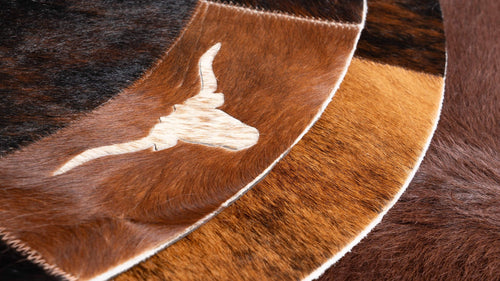
Geometric edges define the zone clearly (4x6 up to 10x14 ft, plus custom) |
|
|
Small reading corner or compact space |
A compact circle anchors a nook without crowding it |
|
|
Narrow room or walkway to the living area |
6x2 or 8x2 ft fits long, narrow spaces |
One honest note: a natural hide isn't rectangular. In a very formal, symmetrical room, that organic shape can feel out of place. If that's your room, layer the hide over a rectangular base or choose patchwork for the structured edge.
Under the Coffee Table, at an Angle or Layered: Placement That Works

Once you've picked the hide, there are three placements worth knowing. Each creates a different feel.
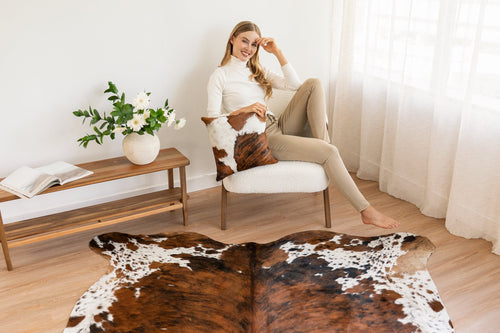
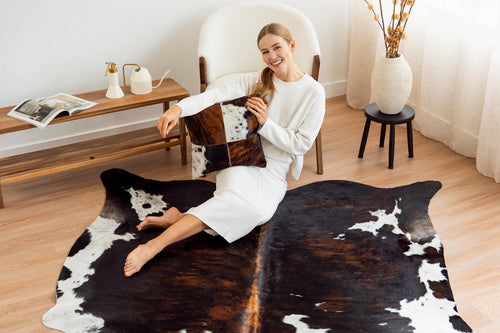
Under the coffee table. This is the classic move. Center the hide under the table with the front legs of the sofa and chairs resting on it. It's clean, balanced, and works in almost every layout. Let the hide's organic edges extend naturally rather than trying to square them off.
At an angle. Turn the hide about 45 degrees so it sits diagonally relative to the furniture. The angle breaks up the room's right angles and adds movement, which is especially effective in a living room full of straight lines. Keep the furniture legs on the hide so it still anchors the space.
Layered. Lay the hide over a larger neutral base, such as jute, sisal, or a flat weave. The base provides a warm frame and the hide adds character and depth. Keep the base visible on all sides so it reads as a deliberate frame. BHG's How to Layer Rugs and 5 Tips for Layering Rugs cover proportions and mechanics.
|
Placement |
The Look |
Best For |
|
Under the coffee table |
Classic, balanced, grounded |
Most living rooms |
|
At an angle |
Dynamic, relaxed, modern |
Rooms full of straight lines |
|
Layered |
Rich, collected, textural |
Large rooms, rooms with an existing neutral base |
"Angling a hide is the easiest way to make a living room feel less stiff. It's a ten-second change that makes the whole arrangement look intentional." — Tom Whitaker, Furniture Designer, Whitaker Home, Nashville TN
Pillows and a Small Hide Over the Armchair: Building the Full Look

The hide on the floor is the foundation. The rest of the look is built at sofa and chair level, and this is where the room goes from nice to finished.
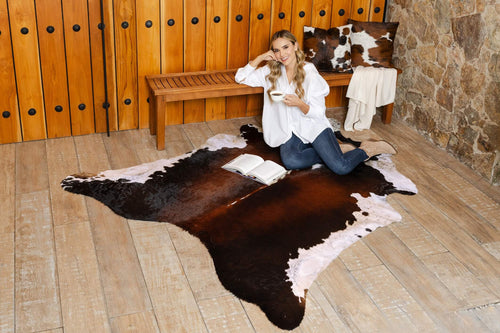
Pillows on the sofa. Bring the hide's tones up to eye level with Cowhide Throw Pillows, from $34, in 16x16, 20x20, and 12x20 lumbar. Because no two hides are identical, a pillow and a rug in the same pattern still read as collected rather than matched. Choose from three backings: Cowhide, Fabric, or Leather.
Add a leather pillow. The smooth grain of a pillow from the Leather Pillow Collection (Sand, Caramel, Stone, Olive, Cocoa, Onyx) contrasts beautifully with hair-on-hide texture. Try one 20x20 leather pillow, one cowhide pillow, and a 12x20 lumbar as the finishing piece.
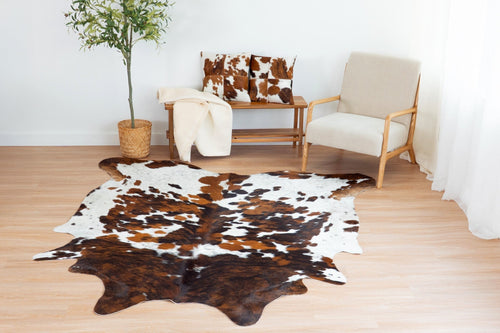
A small hide over the armchair. This is my favorite detail. Drape a Small Hide (natural goat or calf, $68 to $88) over the back or seat of an accent chair. It adds a pocket of warmth and texture, repeats the material of the floor, and takes about thirty seconds to do. It's also easy to swap out when you want a change.
Keep it layered, not busy. Stick to two or three natural tones across the hide, pillows, and small hide. Add warm wood, linen, and a throw, and the room has everything it needs. For ideas in real interiors, Cowhide Decor Ideas has plenty of inspiration.
Matching Hide Tones to Your Sofa, Floors and Color Palette

The last step is making sure the hide belongs. Look at three things: your sofa, your floors, and your overall palette. The goal isn't to match them exactly. It's to share a temperature.
|
Your Sofa Or Palette |
Hide To Choose |
|
Cream, linen, or off-white sofa |
Tricolor Cowhide Rug for warm depth, or Brown and White Cowhide Rug for classic contrast |
|
Dark leather or charcoal sofa |
Champagne or Beige Cowhide Rug for contrast |
|
Warm wood floors |
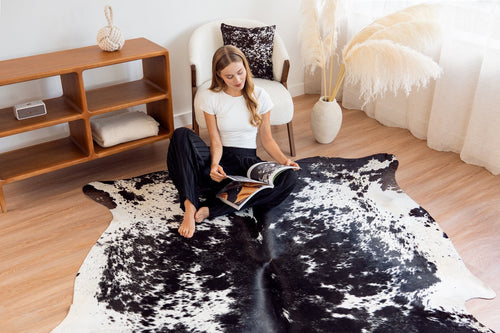
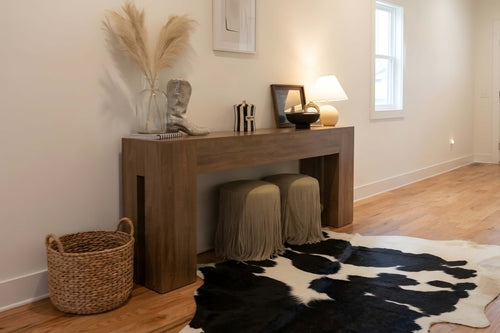
Black and White for presence, or tricolor for tone-on-tone warmth |
|
Cool grey or modern palette |
Grey Cowhide Rug or Brindle Cowhide Rug to bridge warm and cool |
|
Bold wall color (green, navy, terracotta) |
Dark tricolor or brindle to ground the color |
If your living room is busy with pattern already, choose a tonal hide like tricolor or brindle. Their multi-tonal surface reads as ground rather than another pattern. If the room is quiet and minimal, a bolder hide can be the statement. The Rug Color Guide maps wall colors to hides in more detail.
"Don't try to match your rug to your sofa. Match the temperature. If the room runs warm, choose a warm hide. If it runs cool, choose something that bridges. That one rule prevents most color regrets." — Elena Duarte, Color Consultant, Duarte Studio, San Diego CA
FAQ: Living Room Edition

What Size Cowhide Rug Should I Use In My Living Room?
Choose one large enough that the front legs of your sofa and chairs sit on it. If you're between sizes, go larger. A hide that only fits under the coffee table is too small to anchor the room.
Should A Cowhide Rug Go Under The Coffee Table?
Yes, it's the classic placement. Center the hide under the table with the front furniture legs resting on it. You can also angle it or layer it for a different feel.
Can I Layer A Cowhide Rug Over Another Rug?
Yes. Lay it over a larger jute, sisal, or flat-weave base and keep the base visible on all sides. BHG's How to Layer Rugs explains the proportions.
What Cowhide Pattern Is Best For A Living Room?
It depends on your palette. Tricolor and Brown and White suit warm rooms, Brindle works across warm and cool rooms, and Black and White creates strong presence.
How Do I Style Pillows With A Cowhide Rug?
Repeat the hide's tones in Cowhide Pillows and add a leather pillow for smooth contrast. Pillows come in 16x16, 20x20, and 12x20 lumbar.
What Can I Do With A Small Hide In The Living Room?
Drape a Small Hide over an armchair or bench for an easy pocket of warmth and texture. They run $68 to $88.
Will A Cowhide Rug Work In An Open-Plan Living Room?
Yes. For open-plan spaces, a Brazilian Patchwork Cowhide Rug defines the living zone with structured edges. It comes in 4x6 to 10x14 ft plus custom sizes.
Are Cowhide Rugs Good For Living Rooms With Kids And Pets?
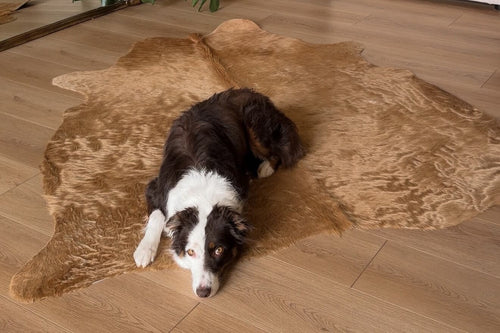
Yes. The non-porous surface resists spills and doesn't trap pet hair or allergens at depth. Tonal patterns like tricolor and brindle disguise everyday wear. See the Pet-Friendly Homes Guide.
How Do I Match A Cowhide Rug To My Sofa?
Match color temperature rather than exact color. Warm hides suit warm rooms, while brindle or grey bridges cool palettes. Contrast works too, such as a light hide under a dark sofa.
How Do I Keep A Living Room Cowhide Rug Clean?
Shake it out weekly, blot spills immediately without rubbing, and spot clean with a barely damp cloth and mild soap. No steam cleaning. The Cleaning and Care Guide has the full protocol.
The Floor That Finishes the Room

A living room becomes a room people want to sit in when every layer is working together: a hide that anchors, pillows that echo it, a small hide that adds one more pocket of warmth, and tones that all share a temperature. Start with the floor, build up from there, and the rest falls into place.
Browse the full Cowhide Rug Collection, the Cowhide Pillows, and the Small Hides at eCowhides.com. Every piece one of a kind.