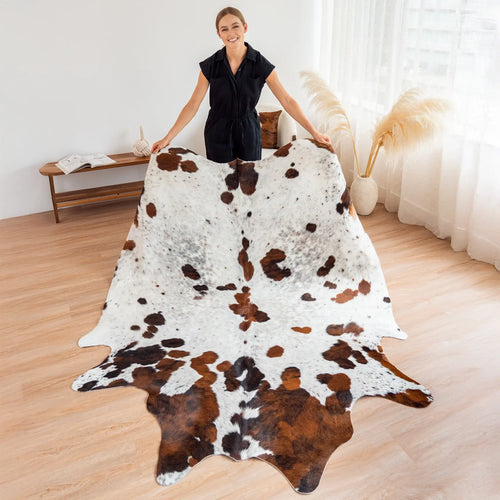
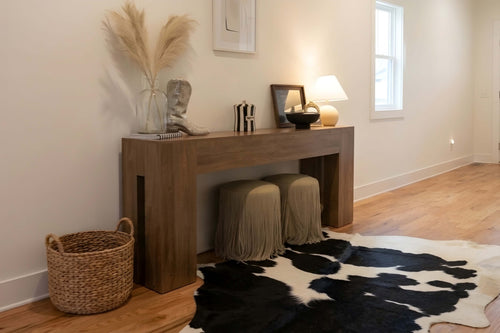
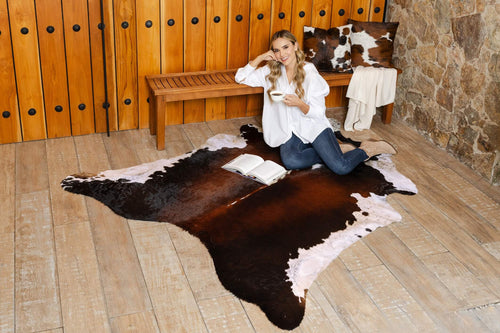
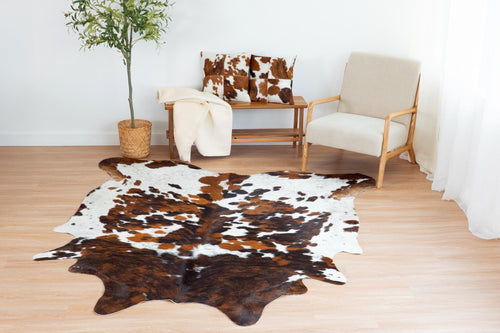
Most rug regrets come from skipping steps. You see a hide you love, you order it, and then one of three things happens: it arrives and it's the wrong size. It's the right size but the wrong tone for your walls. Or it arrives and you realize it's not what you thought it was — the photo looked great, the material didn't match the description.
None of those outcomes are inevitable. They all come from making decisions before you have the information you need. This checklist is designed to give you that information — in the right order, at the right level of specificity — so that when you find the right Cowhide Rug, you know it immediately and you buy it with confidence.
Step One: Know Your Room Before You Browse Anything

This is the step most buyers skip — and the one that causes the most regret. If you open the collection before you know your room, you're choosing based on how a hide looks in isolation. That's not the same as knowing how it will look in your specific room, with your specific walls, furniture, and light.
Before you look at a single hide, write down these five things:
- Room dimensions. Length and width of the full room, and the dimensions of the seating area or zone the rug will anchor. Measure twice. The single most common rug regret is going too small — knowing your dimensions prevents it.
- Wall color. The exact paint color and its temperature — warm (cream, beige, terracotta, green), cool (grey, navy, blue-grey), or neutral. This determines which hide tones will complement vs. compete.
- Floor material and color. Light hardwood, dark hardwood, concrete, tile, carpet. The contrast between the floor and the hide matters — a dark hide on a dark floor reads differently than the same hide on light wood.
- Major furniture tones. Sofa color and material, coffee table color and finish. These are the pieces the hide will live in closest relationship with.
- Light quality. Does the room get strong natural light? From which direction? What does it look like at night under artificial light? Hides look different at different times of day — rooms with warm evening light make natural hide tones glow; cool overhead lighting flattens them.
With those five pieces of information in hand, every subsequent decision becomes significantly easier. The Decorate a Room Guide at eCowhides walks through the room-first approach step by step. The Good Housekeeping Rug Buying Guide is also worth reading as a pre-purchase checklist for any floor covering.
"The clients who are happiest with their cowhide purchases are universally the ones who came in knowing their room. Wall color, floor material, sofa tone — when those are locked in, finding the right hide is almost automatic. Without them, it's guesswork dressed up as shopping." — Rachel Simmons, Interior Designer, Simmons & Co., Austin TX
Size, Shape & Format: Matching the Hide to the Space

Size is the most consequential decision in any rug purchase — and the easiest one to get wrong in a direction that hurts the room. Here's how to get it right for every context.
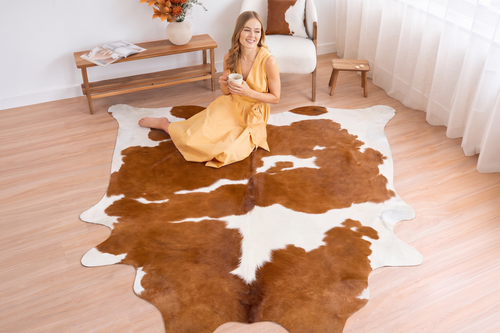
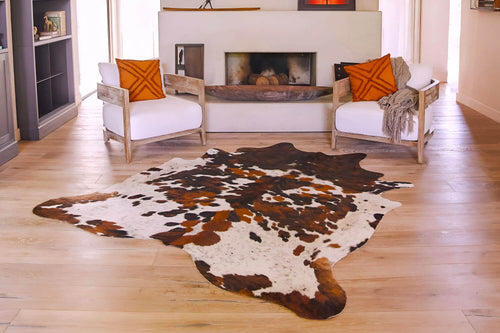
The living room rule: Front legs of all major seating pieces — sofa, chairs, chaise — should sit on the rug. This creates a unified seating zone rather than furniture floating around a rug that's too small for the space. If the rug only fits under the coffee table, it's undersized. Emily Henderson's Rug Size Guide is the most reliable reference for this — use it before you browse, not after.
The bedroom rule: Extend at least 18–24 inches beyond the sides and foot of the bed. In a king bedroom, that typically means a substantial hide in the large size range. For smaller bedrooms or tighter budgets, a Cowhide Runner (6x2 ft) along one or both bedsides is a high-impact alternative to a full area rug.
The dining room rule: At least 24 inches of rug extending beyond the table on all sides, so chairs remain on the rug when pulled out. Undersized dining room rugs are immediately obvious — chair legs scraping off the edge of the rug every time someone sits down is a visible tell.
Format options beyond the full hide:
- Cowhide Runners (6x2 and 8x2 ft) — ideal for hallways, entryways, and bedroom bedsides. The most cost-effective entry point for genuine cowhide.
- Cowhide Floor Mats (3x2 ft) — for compact zones: kitchen island, standing desk, patio threshold. From $49.99.
- Round Cowhide Rugs — for circular dining tables, foot-of-bed placement, or rooms where the organic circular shape creates visual interest.
- Small Cowhide Hides — accent placement, reading corners, beside nightstands. The most accessible price point for genuine cowhide material.
- Patchwork Cowhide Rugs — available in 4x6, 5x8, 8x10, 9x12, and 10x14 ft, plus custom. The widest size range in the collection, and the best format for open-plan spaces where the geometric grid defines zones.
The full placement logic for every room type — with specific positioning guidance — is in the Cowhide Placement 101 Guide.
Pattern, Tone & Color Temperature: How to Choose for Your Specific Room

Pattern choice is where the design decision lives. Every natural cowhide pattern has a personality — an aesthetic register, a range of room contexts where it works best, and a color temperature that either complements or fights the palette you're working with.
The single most useful framework: match color temperature first, then choose pattern within that temperature. Warm room palettes (terracotta, cream, sage green, warm wood) call for warm-toned hides. Cool room palettes (grey, navy, concrete, blue-white) call for cool-toned or neutral hides. Getting the temperature wrong is harder to fix than getting the pattern wrong.
|
Pattern |
Color Temperature |
Visual Weight |
Best Room Context |
|
Warm |
Medium-high |
Farmhouse, bohemian, transitional, warm contemporary |
|
|
Warm-neutral |
Medium |
Any style — the most versatile natural pattern |
|
|
Neutral-cool |
High |
Minimalist, modern, Scandinavian, graphic rooms |
|
|
Warm |
Medium |
Traditional, rustic, transitional — the timeless choice |
|
|
Warm-neutral |
Low |
Luxury minimal, summer rooms, hotel aesthetic |
|
|
Cool |
Low-medium |
Contemporary, coastal, Scandinavian, cool palettes |
|
|
Varies by color |
High |
Statement rooms — the rug sets the palette |
|
|
Warm (tricolor) or warm-neutral (brindle) |
High |
Open-plan zones, statement living rooms, eclectic |
The Rug Color Guide at Chris Loves Julia is the most practical palette-matching reference for working from an existing room color to a hide that fits. For high-traffic zones — entryways, hallways, family rooms — choose patterns with tonal complexity (Brindle, Tricolor, Brown and White) that disguise everyday wear between cleanings. Reserve light and solid tones for lower-traffic rooms.
"Color temperature is the variable most buyers ignore and most designers fix first. It doesn't matter how much you love a hide in isolation — if its temperature fights your room's temperature, the room will feel off and you won't be able to name why. Get the temperature right first. Pattern second." — Carla Webb, Senior Interior Stylist, Webb Design Studio, Nashville TN
Genuine vs. Faux, Brazilian vs. Colombian: The Quality Questions That Matter

Not all cowhide is the same material. And within genuine cowhide, not all sources produce the same quality. Understanding the distinctions before you buy means you know exactly what you're getting.
Genuine vs. Faux: Genuine cowhide is real hair-on-hide from cattle — non-porous surface, natural suede leather backing, unique markings per piece, 20+ year lifespan. Faux cowhide is printed polyester or acrylic on fabric backing — porous, absorbs spills, identical units per SKU, 1–3 year lifespan in high-traffic conditions. The price difference reflects a real material difference. Anything priced under $100 for a full-sized rug is almost certainly synthetic. The Real or Faux Guide covers every distinguishing test. The Why Real Beats Faux post makes the full performance comparison.
Brazilian vs. Colombian: Both produce premium genuine cowhide — the distinction is in the type of piece rather than a quality hierarchy.
- Brazilian Cowhide Rugs — the world's largest cattle herd, a climate that produces dense, rich-colored hides, and tanneries with generations of technical expertise. The core of eCowhides' natural hide collection — tricolor, brindle, black and white, brown and white, and all specialty finishes (metallic, dyed, patchwork) come from Brazilian sources.
- Colombian Cowhide — particularly distinctive in the tricolor pattern, where skilled artisans produce handmade pieces using generations-old leather craft traditions. The Colombian Tricolor Runners at eCowhides are handcrafted in Colombia, and the craftsmanship is evident in the seam quality and finishing.
Tanning certification: How a hide is tanned determines its long-term suppleness, appearance, and environmental footprint. eCowhides' production partners meet Leather Working Group (LWG) standards — an independent third-party audit of environmental compliance and process quality at the tannery level. Uncertified hides may be cheaper; they're also more likely to stiffen, develop odor, or degrade faster. The LWG Certification post explains what the audit actually covers.
Photography transparency: Genuine cowhide retailers should photograph either individual one-of-a-kind pieces (so what you see is literally what ships) or clearly identify curated line products and what you're selecting. If a retailer uses generic "example" photos and ships whatever's in stock, you have no way of knowing what you'll receive.
The Final Checklist: 10 Things to Confirm Before You Buy

Before you complete any cowhide rug purchase, run through this list. Every item that you can confirm with certainty reduces your risk of a purchase you'll regret.
- 1. Room dimensions confirmed. You've measured the space and know the minimum dimensions the rug needs to fill the zone correctly. You've consulted Emily Henderson's Rug Size Guide for your specific room format.
- 2. Size decision: err larger, not smaller. If you're between two sizes, the larger one is almost always the right call. Slightly too large is a minor styling issue. Significantly too small makes the room look unfinished.
- 3. Wall color and furniture tone noted. You know the color temperature of your room (warm/cool/neutral) and you've matched a hide that sits in the same temperature register.
- 4. Pattern appropriate for traffic level. High-traffic zone: tonal multi-colored pattern. Low-traffic room: any pattern including light tones.
- 5. Material confirmed as genuine. Hair-on-hide construction, natural suede leather backing stated in the product description. Price at or above the genuine threshold (from $49.99 for floor mats, from $99.99 for runners, from $159.99 for full hides at eCowhides).
- 6. Origin stated. Brazilian or Colombian. Country of origin should be explicit, not absent.
- 7. Photography transparent. You know whether the photo shows the specific piece or a style category, and you're comfortable with that purchasing model.
- 8. Care requirements understood. Shake out weekly, blot spills immediately, spot clean with mild soap. No professional cleaning required. Full protocol in the eCowhides Cleaning and Care Guide.
- 9. Rug pad planned. On hardwood or tile, a non-slip pad is essential — both for safety and to protect the leather backing from abrasion. The Rug Pad Guide covers the right type for every floor surface.
- 10. Cost-per-year math run. A genuine cowhide at $159.99–$450 over 25 years costs $6–$18 per year with zero professional cleaning costs. Compare that honestly to whatever alternative you're considering. The math is almost always decisive.
With all ten confirmed, you're not guessing — you're buying. Browse the full collection at eCowhides with your checklist in hand.
FAQ: Buyer's Checklist Edition

How Do I Choose A Cowhide Rug For My Living Room?
Start with room dimensions — front legs of all major seating pieces should sit on the hide. Know your wall color and furniture tones before browsing. For warm rooms (terracotta, cream, wood tones), choose warm-toned patterns like Tricolor Cowhide Rugs or Brindle Cowhide Rugs. For cool or neutral rooms, consider Black and White Cowhide Rugs or Grey Cowhide Rugs. The Cowhide Placement 101 Guide covers the full living room approach.
What Size Cowhide Rug Do I Need?
For living rooms, front legs of all major seating pieces on the rug. For bedrooms, 18–24 inches beyond the sides and foot of the bed. For dining rooms, 24 inches beyond the table on all sides. When between sizes, size up. Emily Henderson's Rug Size Guide has room-by-room sizing charts worth bookmarking before you shop.
How Do I Know If A Cowhide Rug Is Genuine?
Flip it over — genuine cowhide has a soft, suede-like natural leather backing. The hair has natural variation in length and direction. The pattern transitions between colors softly and organically, not with sharp printed edges. Price under $100 for a full-sized rug is a strong indicator of synthetic. The Real or Faux Guide covers every test.
What Is The Best Cowhide Pattern For High-Traffic Areas?
Tonal, multi-colored patterns that disguise everyday wear between cleanings: Brindle Cowhide Rugs are the top recommendation — the streaked multi-tonal pattern is the most forgiving of any natural hide. Tricolor Cowhide Rugs and Brown and White Cowhide Rugs are strong alternatives. Avoid light solid tones in very high-traffic zones.
Is Brazilian Or Colombian Cowhide Better?
Both are premium quality — the distinction is in what they produce best rather than which is superior overall. Brazilian Cowhide Rugs form the core of the eCowhides collection across all natural patterns and specialty finishes. Colombian artisan pieces — particularly the handmade tricolor runners — carry a distinctive craftsmanship quality rooted in generational leather tradition. Both are sourced from traceable suppliers and processed by LWG-certified tanneries.
What Format Should I Choose — Full Hide, Runner, or Floor Mat?
Depends on the zone. Full hide: living rooms, dining rooms, primary bedrooms. Cowhide Runner (6x2 or 8x2 ft): hallways, entryways, bedside. Cowhide Floor Mat (3x2 ft): kitchen island, standing desk, patio threshold. Patchwork Cowhide Rugs: open-plan living-dining spaces, where the geometric grid defines zones.
Do I Need A Rug Pad Under A Cowhide?
Yes — on hardwood or tile floors. A non-slip pad prevents movement under foot traffic (a safety issue on smooth floors), protects the leather backing from abrasion, and extends the life of the hide. Cut the pad slightly smaller than the hide so it's hidden at the edges. The Rug Pad Guide covers pad types for every surface.
How Much Should I Expect To Pay For A Genuine Cowhide Rug?
At eCowhides: Cowhide Floor Mats from $49.99, Cowhide Runners from $99.99, full natural hides from $159.99, Color Dyed Cowhide Rugs $249–$519, Metallic Cowhide Rugs $329–$399, Animal Print Cowhide Rugs $299–$399, Patchwork Cowhide Rugs $140–$3,660. At 25 years of ownership with zero cleaning costs, the cost-per-year math is decisive.
How Do I Care For A Cowhide Rug?
Shake it out weekly. Blot spills immediately with a dry cloth — never rub. Spot clean with mild soap and a barely damp cloth if needed, working in the direction the hair lays. Let it air dry at room temperature. No steam cleaning, no soaking, no professional cleaning required. Full instructions in the eCowhides Cleaning and Care Guide.
Can I Layer A Cowhide Rug Over Another Rug?
Yes — place the cowhide on top of a larger natural fiber base (jute, sisal, seagrass), with the base rug visible as a frame. Match color temperature between layers — warm over warm, cool over neutral. Use a non-slip pad underneath. The cowhide should be smaller than the base rug. BHG's How to Layer Rugs covers proportions and positioning.
Buy Right the First Time

The checklist exists because cowhide is a purchase you make once for a room — not one you cycle through every few years. Getting it right the first time means knowing your room, sizing correctly, matching tone and pattern to your palette, confirming material quality, and understanding what you're committing to before you buy.
Browse the full collection — Best Seller Cowhide Rugs, Tricolor, Brindle, Black and White, Patchwork, Runners, and Floor Mats — at eCowhides.com. Checklist in hand. Room measured. Ready to buy right.