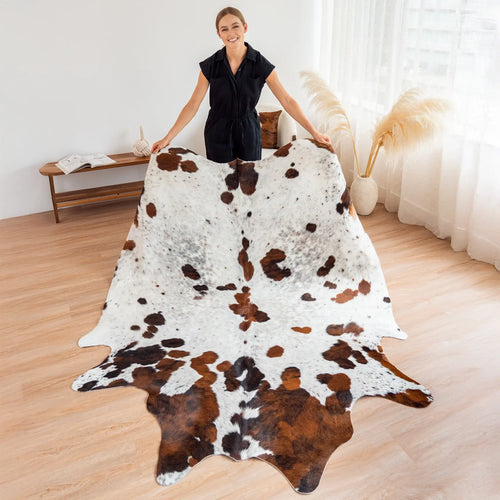
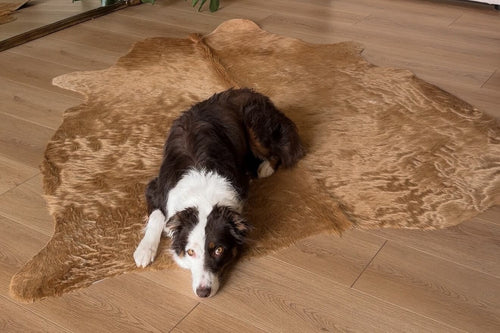
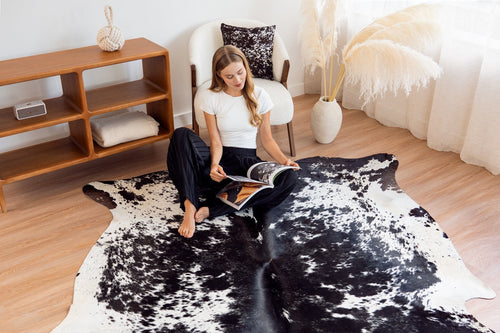
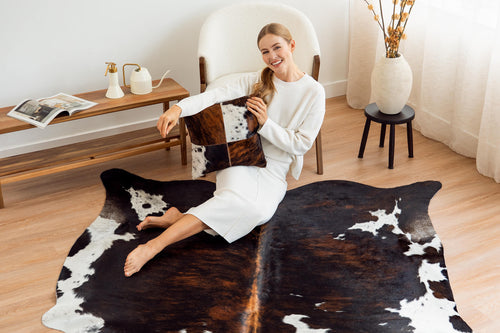
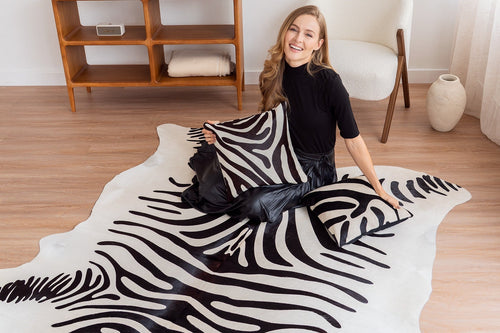
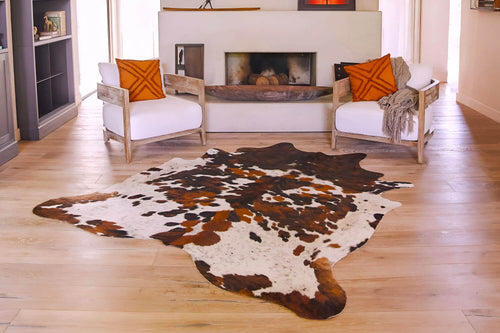
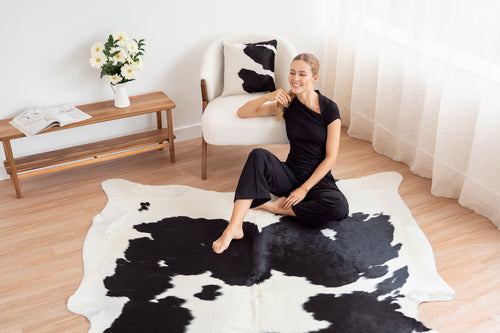
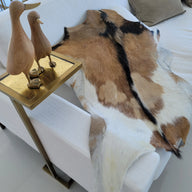
Every collection has a workhorse — the piece that shows up consistently across different contexts, different aesthetics, different rooms, and keeps performing. In the eCowhides collection, that piece is the Brown and White Cowhide Rug.
Not because it's the most dramatic pattern — black and white has it beat on graphic impact. Not because it's the warmest — tricolor carries more tonal richness. Brown and white earns its position as the most universally versatile natural hide through something more reliable than drama: it belongs in more rooms, with more palettes, and across more design styles than any other pattern in the collection. That's not an accident. It's the result of a specific tonal combination that the human eye finds remarkably easy to work with.
Here's everything you need to know about the pattern that goes with everything.
What Makes Brown and White the Most Universally Versatile Cowhide Pattern

The answer is in the tones. Brown and white cowhide operates at medium contrast — high enough to read clearly as a pattern from across a room, low enough to sit comfortably alongside almost any surrounding palette without competing. Compare it to the rest of the natural hide spectrum and the distinction becomes precise:
Black and White Cowhide Rugs are maximum contrast — they define the room's visual character by force. Beautiful, but demanding. They require a room that's ready to accommodate a statement.
Tricolor Cowhide Rugs are warm and complex — they bring richness and tonal depth, but their warm palette temperature narrows their room compatibility. They belong in warm rooms.
Brindle Cowhide Rugs are the most forgiving pattern for everyday life, but their streaked directional marking reads as textured rather than graphic — more of a foundation piece than a focal point.
Brown and white occupies a specific middle position: warm enough to work in rooms built on earth tones and natural materials, neutral enough to sit comfortably alongside cool palettes, graphic enough to be clearly a design choice, and restrained enough not to demand the room rearrange itself around it. That combination of properties is genuinely rare in floor coverings — and it's why brown and white cowhide consistently appears in the widest range of room contexts across interior design portfolios.
|
Pattern |
Contrast |
Temperature |
Room Compatibility |
|
Maximum |
Neutral-cool |
Specific — minimalist, graphic, modern rooms |
|
|
Medium-high |
Warm |
Warm rooms — farmhouse, bohemian, transitional |
|
|
Medium |
Warm-neutral |
Universal — works across warm, cool, and neutral rooms |
|
|
Low-medium |
Warm-neutral |
Wide — most forgiving for high-traffic everyday use |
|
|
Minimal |
Neutral |
Specific — luxury minimal, low-traffic rooms |
The other factor in brown and white's versatility is its natural variation. Every genuine hide has a different distribution of brown and white — some heavily spotted, some with large sweeping patches, some with delicate speckling. Within the single "brown and white" category there's enormous range, which means buyers can find a specific piece that suits their room's specific character rather than accepting a uniform pattern. The Decorate a Room Guide covers how to choose the right distribution for your specific context. Pricing starts from $169.99.
"If I'm specifying a cowhide for a client and I'm not sure which direction to go, I start with brown and white. It's the pattern with the smallest risk of being wrong — it accommodates the most room types, the most palettes, the most furniture styles. Once I know more about the room, I might move to something more specific. But brown and white is always the safe starting point that's never actually safe-looking." — James Holbrook, Interior Designer, Holbrook Studio, Denver CO
Room by Room: Where Brown and White Cowhide Performs Best

The answer to where brown and white cowhide performs best is: most rooms. But each context has specific reasons why it works particularly well there — and specific considerations for making the most of it.
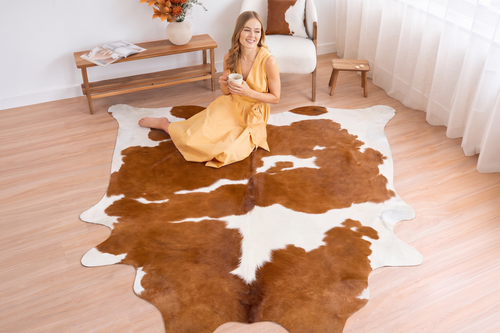
Living Rooms: The most common placement and the one where brown and white cowhide consistently delivers. Anchoring a seating area with a brown and white hide creates a warm, natural focal point that complements rather than competes with the furniture. The pattern reads clearly from across the room without the assertiveness of black and white — which means the sofa, art, and lighting can hold their own rather than being upstaged by the floor. Front legs of all major seating pieces on the hide. Emily Henderson's Rug Size Guide for sizing, the Cowhide Placement 101 Guide for positioning.
Dining Rooms: Brown and white under a dining table creates a warm, grounded floor plane that makes the table and chairs feel deliberate rather than furniture placed on a bare floor. The medium contrast of the pattern holds up visually under the shadow of a table and chairs, unlike lighter patterns that can disappear under furniture. Keep at least 24 inches of hide extending beyond the table on all sides for pulled-out chairs. The non-porous surface handles dinner party spills without drama.
Bedrooms: A brown and white hide at the foot of the bed — or as a full under-bed rug with generous extension on both sides — creates a warm landing zone that starts the morning on the right note. The warm tones in the brown read particularly well against the typical bedroom palette of soft whites, linens, and natural wood. For a bedroom with lighter walls, the hide becomes the room's warmth anchor. For a bedroom with deeper tones (forest green, burgundy, navy), it becomes the natural material that prevents the room from feeling overdressed.
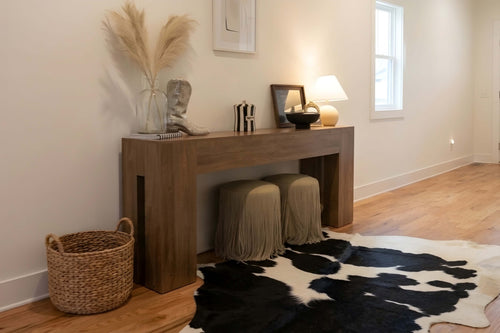
Entryways: Brown and white in an entryway makes a first impression that's warm, natural, and immediately establishes the material character of the home. The medium contrast pattern reads well at the entry scale — impactful enough to notice, restrained enough not to overwhelm a transitional space. The non-porous surface handles tracked-in moisture and entryway debris better than any fiber alternative.
Home Offices: A brown and white hide under a desk or anchoring a sitting area adds natural material and warmth to a space that can otherwise feel utilitarian. The pattern reads well on video calls — natural, considered, not distracting. In a home office with wood desk and warm finishes, it completes the material story without requiring any additional styling effort.
Layered over larger rugs: Brown and white cowhide is one of the best natural hide patterns for layering — its medium contrast pattern reads clearly against the texture of a jute, sisal, or natural fiber base without the high drama of black and white. The combination of the natural fiber base and the cowhide on top creates a floor that has depth and material variety. BHG's How to Layer Rugs and 5 Tips for Layering Rugs cover the proportions and mechanics.
Color Pairing 101: The Palettes That Make Brown and White Shine

Brown and white cowhide's versatility comes from its warm-neutral temperature — it sits comfortably across a wide palette range without fighting any of them. Here are the specific combinations that bring out the best in the pattern.
Warm whites and cream: The most classic pairing and the one that most directly showcases the hide's natural character. Cream walls, natural linen upholstery, warm oak or walnut furniture — against this backdrop, the brown and white pattern reads as the room's primary natural material story. Nothing competes; everything complements. This is the combination for rooms that want to feel collected, organic, and effortlessly put-together.
Sage green and olive: Warm greens and brown and white cowhide sit in the same earthy, natural register — the combination reads as the outdoors brought indoors, in the best possible way. The green adds the color presence the hide's neutral palette doesn't provide; the hide grounds the green with natural material warmth. Terracotta accents bridge the two beautifully.
Terracotta and warm rust: Brown and white with terracotta-toned walls or upholstery is one of the warmest, most richly layered combinations in natural interior design. The orange-brown family of terracotta amplifies the warm undertones in the hide's brown while the white patches provide the contrast that stops the combination from reading as monochromatic. Add warm brass or bronze hardware and the room achieves a depth that's genuinely hard to over-design.
Navy and deep indigo: Cool and warm in deliberate balance. The brown and white hide against navy walls or navy upholstery creates the same tension as a warm wood floor in a cool-toned room — each element makes the other more itself. The brown warms what the navy cools; the navy deepens what the warm tones might otherwise soften. White in the hide connects to white trim or accent pieces and prevents the room from going too dark.
Charcoal and dark grey: Brown and white against charcoal walls or furniture creates a sophisticated contemporary room where the warmth of the hide is doing all the heavy lifting. Against grey, the brown tones in the hide appear richer and more saturated — they're doing contrast work against cool grey rather than sitting companionably alongside warm tones. The result is more modern, more graphic than the cream or green pairings, but still warmer than anything black and white cowhide would produce in the same context.
For detailed palette-matching guidance from a specific room color to a specific hide, the Rug Color Guide at Chris Loves Julia is worth reading before you browse. The Cowhide Decor Ideas at Untamed Creatures is the best source of styled room inspiration for natural hide in real interiors.
"Brown and white cowhide is the rare pattern that doesn't require you to organize your room around it. You put it down and the room gets warmer and more grounded — not louder. That quality is genuinely rare in floor coverings at any price point, and it's why designers reach for it across such a wide range of projects." — Rachel Torres, Interior Stylist, Torres Design, Chicago IL
Styling With Pillows, Runners & Natural Accents

A brown and white cowhide rug on the floor is a complete design move on its own. The full material story comes from extending it to other planes and formats — connecting the floor to the sofa, the hallway, the details — in a way that feels intentional without feeling themed.
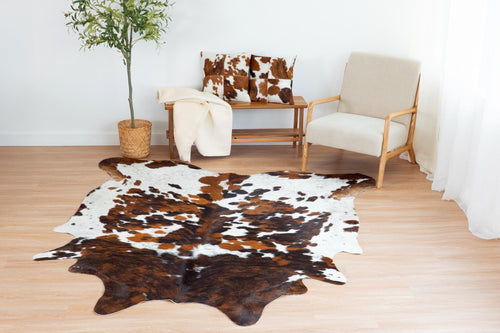
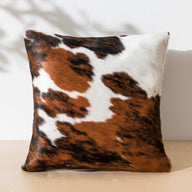
Pillows on the sofa: The most direct complement is a Brown and White Cowhide Pillow on the sofa — same pattern, different scale, different plane. Because no two genuine pieces are identical, the pillow and the rug carry the same color story with different markings, which reads as considered variation rather than a matched set. For a more layered sofa grouping, combine a brown and white pillow with a Brindle Cowhide Pillow — the brindle's directional texture contrasts with the spotted brown and white in a way that's more interesting than strict repetition. Available in 15x15, 20x20, and 12x20 lumbar. Backing: Cowhide Backing for maximum texture, Fabric Backing for softer sofa placement, Leather Backing for a tailored finish.
Runners in adjacent zones: A Cowhide Runner in a natural pattern — brown and white, tricolor, or brindle — in an adjacent hallway extends the material story from the main room into the transitional zone. A brown and white runner connecting an entryway to a brown and white living room hide creates a continuous natural material thread through the home. From $99.99.
Natural material accents: Brown and white cowhide belongs in the company of other natural materials — warm wood furniture, rattan, linen, ceramic, woven baskets. The natural material family creates coherence without requiring pattern coordination. A room with a brown and white hide, walnut furniture, linen upholstery, and ceramic accents reads as naturally composed because the materials are all making the same argument: organic, warm, real. The Cowhide Placement 101 Guide covers the full room-building approach.
Layering as a starting point: A brown and white cowhide over a larger jute or sisal base is one of the most accessible entry points for rug layering — the natural fiber ground and the natural hide top layer sit in the same material family, and the medium contrast of the brown and white reads beautifully against the rough texture of the fiber base. The base rug should extend beyond the cowhide on all sides, visible as a natural frame. A non-slip pad underneath keeps both in place.
Floor Mats as satellite pieces: A Cowhide Floor Mat in a matching or complementary natural pattern at a kitchen island, beside a desk, or at a bathroom threshold extends the hide material story into compact zones without requiring a full area rug investment. From $49.99.
"The brown and white hide is the piece that makes a room feel like it was assembled by someone who knows what they're doing with natural materials. It doesn't demand credit — it just makes everything around it look more considered. That's the kind of piece designers quietly rely on more than any other." — Anna Chen, Senior Interior Designer, Chen & Associates, San Francisco CA
Natural vs. Printed Brown and White: Why Authentic Always Wins

The faux cowhide market is particularly active in the brown and white category — it's the pattern most commonly copied because it's the most commercially appealing and the most immediately recognizable. Understanding the distinction before you buy matters, because the gap between authentic and printed in this specific pattern is significant and entirely predictable.
What printed brown and white faux cowhide is: A manufactured cow-spot pattern in brown and off-white printed onto polyester, acrylic, or polypropylene backing. The pattern distribution is designed — approximately uniform, approximately random-looking, but manufactured to a repeating template. The surface is soft fiber pile. The backing is fabric or synthetic. Price: typically $40–$120 for a full-sized piece.
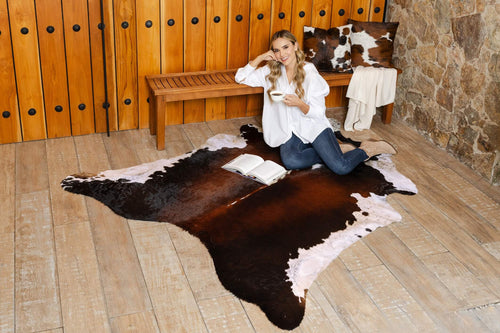
What genuine brown and white cowhide is: The actual natural marking distribution of a specific animal — each brown patch and white ground area occurring exactly where it occurred on the hide. The distribution is genuinely random, genuinely unique, and carries the organic variation that makes each piece one of a kind. The surface is real hair-on-hide. The backing is natural suede leather. Every piece at eCowhides is sourced from Brazilian Cowhide suppliers meeting Leather Working Group (LWG) certification standards. Price: from $169.99.
The performance gap is structural, not marginal: Genuine cowhide's non-porous hair-on-hide surface repels spills, doesn't trap allergens, and doesn't compress under foot traffic. Faux cowhide absorbs spills like any textile, accumulates allergens at depth, and develops matted pile areas within a year of regular use. Genuine cowhide lasts 20+ years with basic care. Faux cowhide lasts 1–3 years in normal household conditions. The cost-per-year math eliminates the apparent price advantage of faux within the first two years of ownership. The Real or Faux Guide covers every test for confirming authenticity. The Why Real Beats Faux post makes the full performance comparison.
In person, the difference is immediate: Flip the rug over. Genuine cowhide has a soft, napped suede-like natural leather backing with visible fiber structure. Faux has fabric, felt, or coated synthetic backing. Run your hand through the hair. Genuine hide has natural variation in length, density, and direction. Faux pile is perfectly uniform. Look at the color transitions. Genuine hide's brown-to-white transitions are soft and organic — the way real hair coloring shifts. Printed faux has slightly sharp color boundaries, like a printed edge rather than a natural one. The Faux vs Real Comparison answers the direct question in full.
FAQ: Brown and White Cowhide Edition

What Is A Brown and White Cowhide Rug?
A Brown and White Cowhide Rug is a genuine hair-on-hide natural rug featuring the animal's natural spotted or patched brown coloring against a white ground. The distribution of brown and white is unique to each individual animal — no two pieces are identical. The surface is non-porous hair-on-hide; the backing is natural suede leather. Every piece at eCowhides is genuine Brazilian cowhide.
Why Is Brown and White the Most Versatile Cowhide Pattern?
Brown and white operates at medium contrast and warm-neutral color temperature — high enough contrast to read clearly as a design element, restrained enough not to demand the room rearrange itself around it. This combination gives it wider room compatibility than any other natural hide pattern. It works in warm rooms, cool rooms, and neutral rooms; in traditional, transitional, and contemporary spaces; alongside bold wall colors and quiet neutral palettes.
What Wall Colors Work Best With Brown and White Cowhide?
Warm whites and cream for a classic natural look. Sage green and olive for an earthy, organic combination. Terracotta and rust for maximum warm-tone richness. Navy and deep indigo for sophisticated warm-cool balance. Charcoal and dark grey for a more contemporary, graphic interpretation. Brown and white cowhide is one of the few patterns that works credibly across all of these — the Rug Color Guide at Chris Loves Julia maps specific room colors to specific hide recommendations.
What Is The Difference Between Brown and White and Chocolate and White Cowhide?
Chocolate and White Cowhide Rugs feature a deeper, darker, more saturated brown — closer to espresso or dark chocolate — while brown and white carries a warmer, more medium-toned brown. Chocolate and white tends to read darker and more dramatic; brown and white reads warmer and more classic. Both are warm-toned patterns — the choice comes down to how much depth and drama you want in the floor, and the existing darkness level of the room.
How Do I Style A Brown and White Cowhide Rug With Pillows?
The most effective approach: a Brown and White Cowhide Pillow plus a Brindle Cowhide Pillow on the sofa. Same material family, different pattern structure — the spotted brown and white and the directional brindle texture create variety within the same natural material story. Available in 15x15, 20x20, and 12x20 lumbar.
What Are The Best Rooms For A Brown and White Cowhide Rug?
Living rooms, dining rooms, bedrooms, entryways, and home offices all work well. Brown and white is the pattern with the fewest room contexts where it doesn't perform — its medium contrast and warm-neutral temperature make it accommodating across most residential placements. It's also one of the best patterns for layering over natural fiber base rugs.
Is Brown and White Cowhide Good For High-Traffic Areas?
Yes — the medium brown tones handle everyday wear and light debris visually better than lighter patterns, and the non-porous hair-on-hide surface resists spills and doesn't accumulate allergens. For the highest-traffic zones with the most forgiving visual, Brindle Cowhide Rugs are slightly more forgiving due to tonal complexity, but brown and white performs well in most high-traffic household contexts. The Cowhide Durability Guide documents what long-term ownership looks like in practice.
How Much Does A Brown and White Cowhide Rug Cost?
Brown and White Cowhide Rugs at eCowhides start from $169.99 for full-sized natural hides. Cowhide Runners start from $99.99. Cowhide Floor Mats start from $49.99. At 20+ years of ownership with zero professional cleaning costs, the cost-per-year is among the lowest of any floor covering available.
How Do I Know If A Brown and White Cowhide Rug Is Genuine?
Flip it over — genuine cowhide has a soft, suede-like natural leather backing. The hair has natural variation in length and direction; color transitions from brown to white are soft and organic rather than printed-edge sharp. Price under $100 for a full-sized piece is a reliable indicator of synthetic. The Real or Faux Guide covers every test in detail.
How Do I Care For A Brown and White Cowhide Rug?
Shake it out weekly. Blot spills immediately with a dry cloth — never rub. Spot clean with mild soap and a barely damp cloth, working in the direction the hair lays. Air dry at room temperature. No steam cleaning, no soaking, no professional cleaning required. Full protocol in the eCowhides Cleaning and Care Guide.
The Pattern That Never Gets It Wrong

Brown and white cowhide earns its position as the most universally versatile natural hide not by being the most dramatic or the most distinctive, but by being the most reliable. It works in the living room, the dining room, the bedroom, and the entryway. It works against cream walls and against charcoal. It works in a farmhouse and in a contemporary apartment. It works layered and it works alone.
That consistency isn't neutrality — it's the result of a tonal combination that the human eye finds naturally compatible with the widest range of environments. Put it in the right room with the right palette, and it looks like it was always there.
Browse the full Brown and White Cowhide Rug Collection at eCowhides.com. Add a Brown and White Cowhide Pillow for the sofa and a natural Cowhide Runner for the hallway. One material family. Every room covered. Each piece one of a kind.