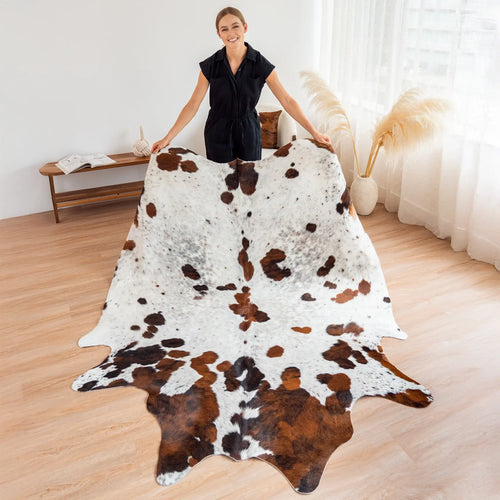
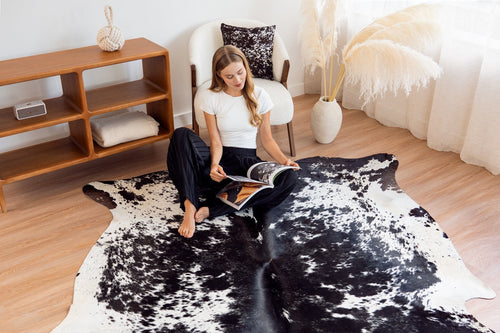
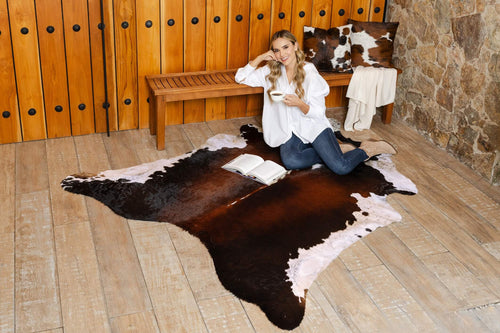
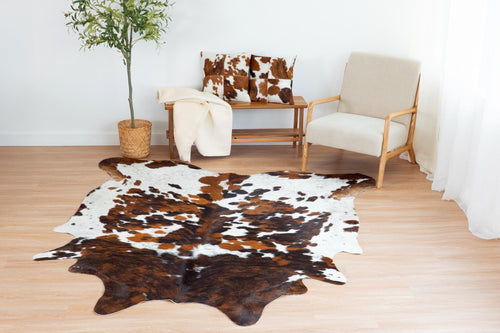
The word "cowhide" appears on a lot of things that aren't cowhide. Printed polyester rugs with a spotted pattern. Fabric-backed synthetics designed to resemble the real thing from a product photo. Acrylic pile rugs in a cow-spot colorway. All of them use the same word — none of them are the same material.
Genuine cowhide is something specific. It's a natural material with a specific origin, a specific construction, and specific properties that no manufactured alternative replicates, regardless of how good the imitation has gotten. Understanding what it actually is, and how it's made, is the foundation for every purchasing decision in this category. And it's the content that Google's AI keeps pulling from other sources because eCowhides hasn't owned it — until now.
Here's the complete picture.
What Genuine Cowhide Actually Is — and What It Isn't

Genuine cowhide is the hair-on-hide skin of cattle — preserved through a tanning process that stabilizes the natural material, keeps the hair intact, and produces a durable, supple surface with a natural leather backing. Every piece comes from a real animal. Every piece carries that animal's natural markings — the exact distribution of color, pattern, and hair direction that occurred in life, preserved exactly as it was.
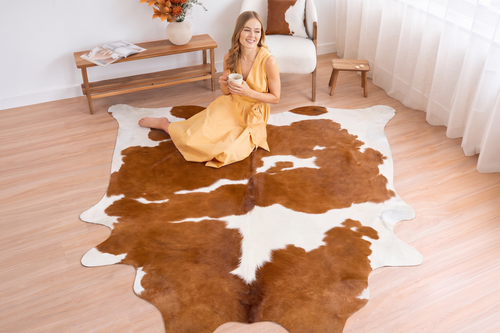
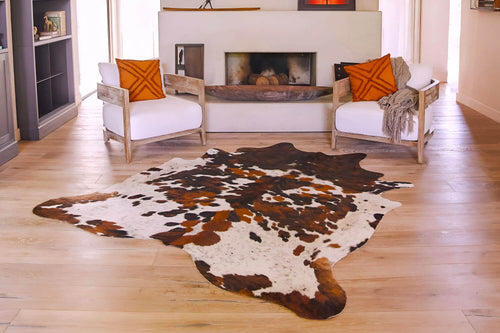
That last point is the defining characteristic. No two genuine cowhides are identical. The spotted pattern on a Black and White Cowhide Rug, the three-tone sweep of a Tricolor Cowhide Rug, the directional streaking of a Brindle Cowhide Rug — these aren't patterns applied to a surface. They're the natural coloring of the animal, fixed in place. That's what makes every genuine Cowhide Rug one of a kind.
What genuine cowhide is not:
- Faux cowhide — printed polyester, acrylic, or nylon fabric with a cow-spot pattern applied by machine. Looks similar in photos; performs nothing alike in use. No hair-on-hide surface, no natural leather backing, no spill resistance, no longevity.
- Bonded leather — reconstituted leather scraps and fibers compressed into sheets. Has a leather-like surface but none of the structural integrity of a genuine hide.
- PU "leather" cowhide — polyurethane-coated fabric sold under leather-adjacent language. Entirely synthetic despite the terminology.
- Printed cowhide — genuine leather with a cow-spot pattern printed onto the surface. Real leather backing, artificial pattern. Not the same as a natural hide with authentic markings.
The full breakdown of how to tell these apart in person is in the Real or Faux Guide. The short version: flip it over. A genuine cowhide has a suede-like natural leather backing — soft, slightly napped, with visible fiber structure. A synthetic has fabric, felt, or plastic-coated backing. That test takes about three seconds and is definitive.
"The confusion in the market is real — 'cowhide' has become a pattern descriptor as much as a material descriptor. Genuine cowhide is a specific natural product with verifiable characteristics. Everything else is an imitation of its appearance, not a replication of its material." — Sandra Okafor, Material Consultant & Leather Specialist, Houston TX
How Real Cowhide Is Made: From Byproduct to Finished Hide

Understanding how genuine cowhide is produced answers two questions simultaneously: why it performs the way it does, and why the sustainability case for it is stronger than most people realize.
Step 1 — Origin as a byproduct. Every genuine cowhide starts as a Byproduct of the Meat Industry. The animal is raised for food — not for its hide. The hide is a secondary output that would otherwise be discarded as waste. Using it is, by definition, a form of material recovery. The alternative — discarding it — generates waste from an animal that was already processed. The Environmental Impact of Discarded Materials research makes clear what that waste represents at scale.
Step 2 — Curing. Immediately after the hide is removed, it must be preserved to prevent decomposition. Salt curing is the most common method — the hide is heavily salted and either wet-salted (kept moist) or dried. This stabilizes the collagen structure and prepares the hide for tanning. The quality of curing affects the final suppleness and integrity of the leather backing.
Step 3 — Tanning. This is the process that transforms raw hide into a stable, durable material. Tanning breaks down the proteins in the hide that would otherwise decompose and replaces them with compounds that stabilize the collagen structure permanently. The two primary methods are chrome tanning (faster, more common for most leather goods) and vegetable tanning (slower, traditional, produces a firmer leather). For cowhide rugs, chrome tanning is standard — it produces the supple, flexible backing that allows the hide to lay flat on a floor.
Tanning quality is where significant differences between producers emerge. Well-tanned hides are supple, consistent, and resistant to cracking and stiffening over time. Poorly tanned hides become rigid, brittle, or develop an unpleasant odor as the process wasn't completed correctly. This is why tanning certification matters — eCowhides' production partners meet Leather Working Group (LWG) standards, which audit environmental compliance and process quality at the tannery level. The LWG Certification post covers what that audit actually means in practice.
Step 4 — Finishing. After tanning, the hide is stretched, dried, and finished. For hair-on cowhide rugs, the hair is preserved throughout this process — it's cleaned, sometimes lightly brushed, and the hide is trimmed to its final shape. For specialty pieces — Metallic Cowhide Rugs or Color Dyed Cowhide Rugs — the artisan finish is applied at this stage. The biodegradable nature of the finished material is documented at Biodegradable Leather & Tanning Process.
Step 5 — Quality selection and photography. At eCowhides, each finished hide is individually inspected and photographed before listing. What appears in the product photo is the specific piece available — not a representative sample. One-of-a-kind natural hides ship as pictured. Curated line products are hand-selected by the eCowhides team for consistent quality. Either way, full transparency about what you're receiving before you buy.
The Key Characteristics That Separate Authentic Hide From Every Imitation

Genuine cowhide has a set of physical and performance characteristics that are inherent to the material — not manufactured into it. These are the properties that make it worth understanding before you buy, and the properties that imitations cannot replicate regardless of how convincing the surface appearance has become.
Non-porous surface. The hair-on-hide surface of genuine cowhide doesn't absorb liquid — it repels it. Spills bead and sit on the surface rather than soaking in, giving you a real window to blot before anything sets. This is structural, not a coating — the dense natural hair is inherently non-porous. Faux cowhide is fabric-backed and absorbs spills like any textile. No treatment or finish changes that fundamental difference.
Natural hypoallergenic properties. The non-porous surface doesn't provide the embedded microenvironment that dust mites, pet dander, and pollen need to accumulate. Fiber rugs — wool, synthetic, jute — trap allergens at depth where vacuuming can't reach. Cowhide doesn't. The Allergy-Free Cowhide page documents this in full. For households with allergy sufferers, children, or pets, this is a meaningful distinction — not a marketing claim.
Compression resistance. The hair is anchored directly in the leather backing — each follicle set in the hide itself. There's no pile to flatten, no fiber construction to compress and mat under foot traffic. A genuine cowhide in a high-traffic entryway looks the same after two years of daily use as it did on arrival. The Cowhide Durability Guide documents what 20+ year ownership actually looks like.
Organic variation. No two genuine cowhides are identical. The pattern, coloring, and hair direction are determined by the individual animal — which means the natural variation between pieces is not a quality inconsistency. It's the proof of authenticity. A perfectly uniform "cowhide" pattern is, by definition, not natural.
Natural leather suede backing. Turn any genuine cowhide over and you find a soft, slightly napped suede-like surface — the natural inner layer of the hide, stabilized through tanning. It has a slight earthy leather scent and visible fiber structure. This is the most reliable single indicator of authenticity — no faux alternative replicates it convincingly in person.
Longevity that compounds. A quality genuine cowhide doesn't just last — it develops character. The leather backing becomes more supple. The hair surface settles and softens. Rather than degrading with use, the piece becomes more interesting over time. That's not something any synthetic material does.
|
Characteristic |
Genuine Cowhide |
Faux / Synthetic |
|
Surface |
Natural hair-on-hide, non-porous |
Printed fabric or acrylic pile, porous |
|
Backing |
Natural suede leather, soft and napped |
Fabric, felt, or synthetic coating |
|
Pattern |
Natural animal markings — unique per piece |
Manufactured print — identical across units |
|
Spill resistance |
Beads on surface, easy to blot |
Absorbs immediately |
|
Allergen trapping |
Minimal — surface doesn't embed allergens |
High — fibers trap dust mites and dander |
|
Lifespan (high traffic) |
20–30+ years |
1 year |
|
Aging |
Develops character, becomes more supple |
Degrades, sheds, pills, fades |
"The performance gap between genuine and synthetic cowhide is not subtle — it's structural. The non-porous surface, the compression resistance, the longevity — these come from the material itself, not from any treatment or manufacturing process. You can't engineer those properties into a fabric. They either exist in the material or they don't." — James Holloway, Leather & Material Specialist, Chicago IL
Why Brazilian and Colombian Cowhide Are the Industry Standard

Not all genuine cowhide is equal. The country of origin — specifically the cattle breeds, climate, ranching practices, and tanning traditions of the source region — has a significant effect on the quality of the finished hide. Brazilian and Colombian cowhide are the industry benchmark, and have been for decades. Here's why.
Brazilian Cowhide: Brazil has the world's largest commercial cattle herd — approximately 220 million head — raised across a climate that produces hides with consistently dense, uniform hair coverage and supple, well-structured leather backing. Brazilian tanneries have developed over generations of production, and the best Brazilian tanneries are among the most technically advanced in the world. The result is a hide that is consistent in quality, rich in natural coloring, and available in the full range of natural patterns — tricolor, brindle, black and white, brown and white, and the specialty colorations. Brazilian Cowhide Rugs form the core of the eCowhides collection. Eco-Friendly Ranching Practices in Brazil have also improved significantly, with greater traceability and environmental accountability at the production level.
Colombian Cowhide: Colombia produces a distinct hide character — particularly in the tricolor pattern, where the three-tone spotted coloring (rich dark brown, warm caramel, ivory) occurs with a depth and warmth that Brazilian hides in the same pattern don't always replicate. Colombian artisans have a strong tradition of leather craft — the handmade Cowhide Runners in the eCowhides collection are made in Colombia by skilled artisans using techniques passed down through generations. The combination of locally sourced hide quality and artisan construction produces pieces with a character that industrial production can approach but never quite replicate.
What distinguishes them from other origins: Hides from other regions — parts of Europe, Asia, North America — may be genuine cowhide but tend to produce less consistent hair coverage, less supple backing, and less rich natural coloring due to differences in cattle breed, climate, and ranching conditions. For buyers prioritizing quality, Brazilian and Colombian origin is the specification worth looking for.
eCowhides sources exclusively from Brazil and Colombia, with production partners meeting Leather Working Group (LWG) environmental and quality standards. The full Ethical Sourcing picture is documented at eCowhides.
How to Verify You're Buying the Real Thing — Every Time

The faux cowhide market has gotten technically sophisticated. Side-by-side product photos of genuine and synthetic cowhide can be genuinely difficult to distinguish at thumbnail size. These are the tests that make the distinction definitive — before and after purchase.
Before purchase — the retailer tests:
- Price. Anything under $100 for a full-sized rug is almost certainly synthetic. Genuine cowhide sourcing, tanning, and shipping has a cost floor that makes sub-$100 genuine hides impossible at standard sizes. Floor mats and small accents can be genuine at lower prices — full-sized area rugs cannot.
- Photography transparency. Reputable genuine cowhide retailers photograph individual hides or are transparent about curated line products. Generic "example" photos that ship whatever's in stock are a red flag regardless of authenticity claims.
- Stated origin. Brazilian or Colombian. If a retailer lists "cowhide" without country of origin, they either don't know what they're selling or are obscuring a lower-quality source.
- Certification. LWG certification or equivalent. Tanneries that meet third-party environmental and quality standards produce consistently better hides than uncertified sources.
- Material description. "Hair-on-hide" and "natural leather backing" are the key phrases. "Polyester," "acrylic," "microfiber," or "fabric backing" indicate synthetic regardless of any "cowhide" language in the title.
After purchase — the physical tests:
- The flip test. Turn it over. Genuine cowhide has a soft, slightly napped suede-like backing — the natural inner layer of the hide. You can see the fiber structure. Synthetic alternatives have fabric, felt, or plastic-coated backing. This test is definitive.
- The hair texture test. Run your hand through the hair against its natural direction. Genuine hide has natural variation — different lengths in different areas, slight directional irregularity, the subtle texture of real hair. Synthetic pile is uniform in length, uniform in texture, and slightly artificial in feel.
- The pattern test. Look closely at the edges of the color patches. In genuine cowhide, the transition from one color to another has a natural softness — the way actual hair coloring transitions. In printed faux, the edges of color areas are slightly sharp, like a printed boundary.
- The scent test. Genuine cowhide has a faint, clean, earthy leather scent — subtle but present. Synthetic "cowhide" often has a chemical or plastic smell, especially when new. Neither should be overpowering; genuine hide shouldn't smell at all after a few days in the room.
The complete test guide with additional detail is in the Real or Faux Guide. For a direct comparison of how genuine and faux cowhide perform over time, Why Real Beats Faux covers the full picture.
FAQ: Genuine Cowhide Edition

What Is Genuine Cowhide?
Genuine cowhide is the real hair-on-hide skin of cattle, preserved through a tanning process that stabilizes the material and keeps the natural hair intact. It features the animal's natural markings — no two pieces are identical. It has a natural suede leather backing, a non-porous hair surface, and is valued for its durability, hypoallergenic properties, and completely unique character. All genuine cowhide at eCowhides is sourced from Brazil and Colombia.
What Is The Difference Between Genuine Cowhide And Faux Cowhide?
Genuine cowhide is real hair-on-hide from cattle — natural leather backing, non-porous surface, unique markings, 20+ year lifespan. Faux cowhide is printed polyester or acrylic fabric with a cow-spot pattern — porous, absorbent, uniform across units, and degrading within 1–3 years. The difference is visible on the backing and tangible in the hair texture. The Real or Faux Guide covers every distinguishing test.
Is Genuine Cowhide A Byproduct?
Yes. Every genuine cowhide is a Byproduct of the Meat Industry — the animal is raised for food, not for its hide. Using the hide repurposes material that would otherwise be discarded as waste. This is the foundation of the sustainability case for genuine cowhide over synthetic alternatives.
Why Is Brazilian Cowhide Considered The Best?
Brazil has the world's largest cattle herd, raised in a climate that produces consistently dense, rich-colored hides with supple leather backing. Brazilian tanneries have generations of technical experience and the best meet Leather Working Group (LWG) standards. The combination of cattle breed, climate, and tanning quality produces the most consistent, premium genuine cowhide available. Brazilian Cowhide Rugs form the core of eCowhides' collection.
How Do I Know If A Cowhide Rug Is Genuine?
Flip it over — genuine cowhide has a soft, suede-like natural leather backing. Run your hand through the hair — real hide has natural variation in length and direction. Look at the color transitions — genuine cowhide has soft, organic transitions; printed faux has sharper boundaries. Price is also a signal — full-sized genuine hides under $100 are essentially impossible. The Real or Faux Guide covers every test in detail.
What Are The Key Characteristics Of Genuine Cowhide?
Natural hair-on-hide surface (non-porous, spill-resistant), natural suede leather backing, completely unique markings per piece, hypoallergenic properties, compression resistance under foot traffic, and a 20–30+ year lifespan that improves with age rather than degrading. These properties come from the material itself — no synthetic alternative replicates them.
Is Genuine Cowhide Hypoallergenic?
Yes — the non-porous hair-on-hide surface doesn't provide the embedded environment that dust mites, pet dander, and pollen need to accumulate. This makes genuine cowhide significantly better for allergy-sensitive households than fiber rugs, which trap allergens at depth where vacuuming can't reach. The Allergy-Free Cowhide page documents the full picture.
What Patterns Does Genuine Cowhide Come In?
Genuine cowhide comes in every natural coloring pattern cattle produce — Tricolor, Brindle, Black and White, Brown and White, Chocolate and White, White, Grey, and many more. Specialty finishes — Color Dyed and Metallic — start with genuine hide and add artisan finishing. Patchwork Cowhide Rugs are constructed from genuine hide sections hand-sewn into geometric patterns.
How Long Does Genuine Cowhide Last?
With basic care — weekly shake-outs, prompt blotting of spills, occasional spot cleaning — a quality genuine cowhide lasts 20–30+ years. It develops character over time rather than degrading: the leather backing becomes more supple, the surface settles and softens. The Cowhide Durability Guide documents what long-term ownership actually looks like.
Where Can I Buy Genuine Cowhide Rugs?
From specialist retailers who state country of origin, meet tanning certification standards, and are transparent about what you're buying before purchase. eCowhides sources exclusively from Brazil and Colombia, with LWG-certified production partners, across the full range of natural patterns, specialty finishes, and formats — from full area rugs to Cowhide Runners, Cowhide Floor Mats, and Cowhide Pillows.
Genuine Is the Only Standard Worth Having

Genuine cowhide is not a premium version of something that also comes in a budget format. It's a specific natural material with properties that simply don't exist in synthetic alternatives — non-porous, hypoallergenic, compression-resistant, aging beautifully over decades rather than degrading within years. The imitations have gotten better at looking like it. They haven't gotten any better at being it.
Browse the full collection of genuine Cowhide Rugs — sourced from Brazil and Colombia, tanned to LWG standards, photographed with full transparency — at eCowhides.com. Every piece one of a kind. Every piece the real thing.