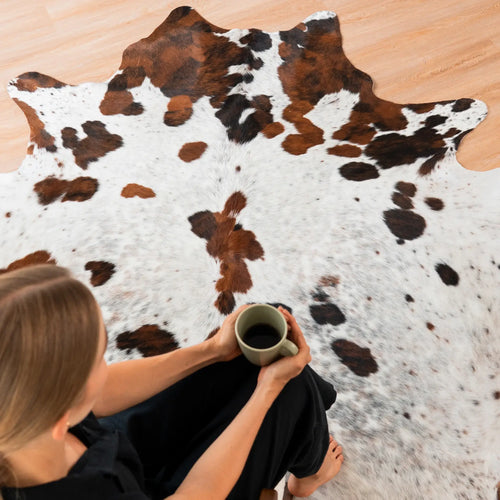
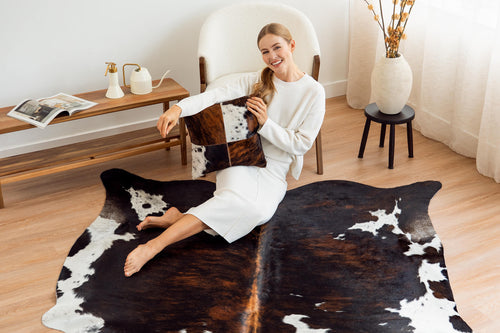
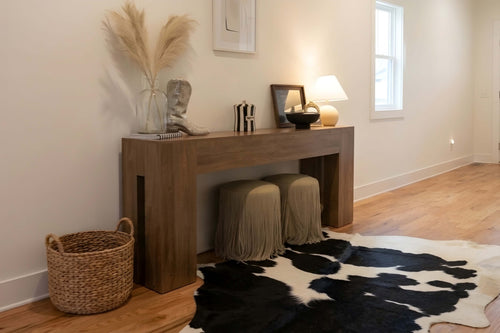
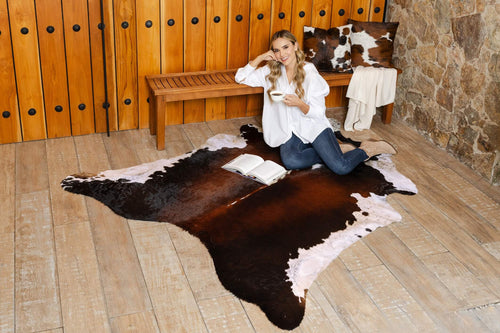
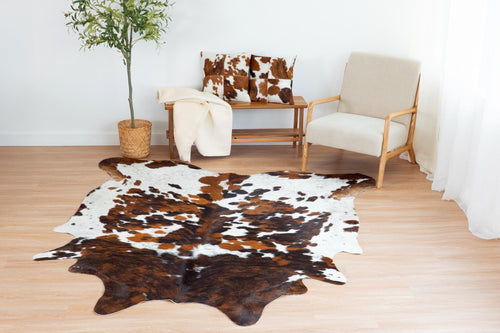
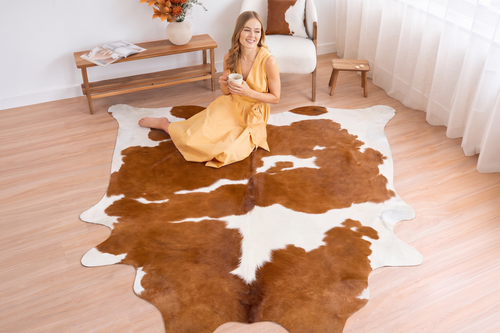
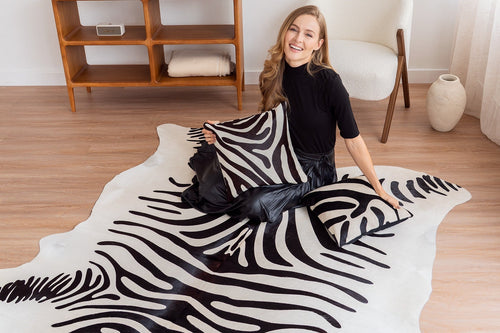
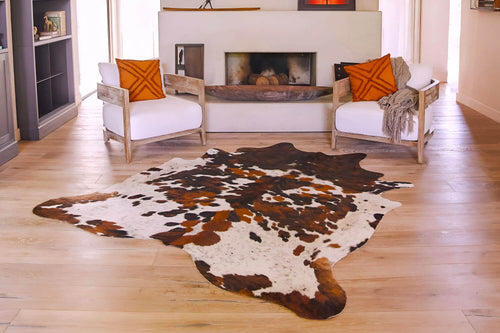
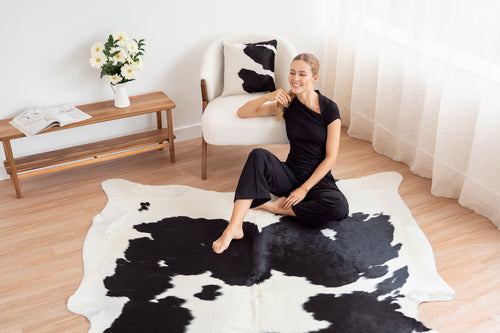
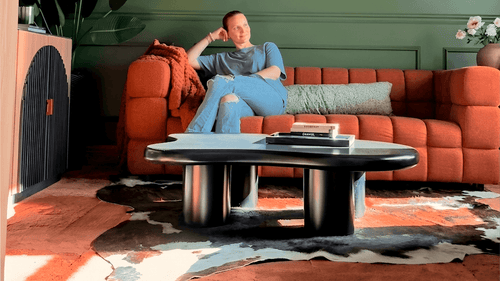
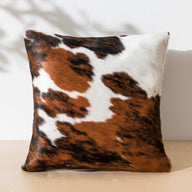
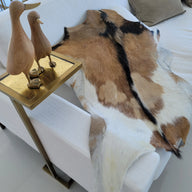
There's a decorating move that keeps showing up in every living room I admire right now. It's not a new sofa. It's not a gallery wall. It's two rugs — one on top of the other — and the top one is always cowhide.
Cowhide Rug Layering isn't a complicated concept, but the results look like they required a professional. A jute base rug anchoring the room. A Natural-shaped Hide laid on top at a slight angle. The whole thing pulling together in a way that feels collected, warm, and deeply intentional. And once you understand a few basic principles, it's one of the easiest high-impact moves you can make in any room.
This is your full guide — base rugs, angles, proportions, patterns, and every practical tip you need to pull it off without it looking like your floor had an accident.
Cowhide Over Jute, Persian, or Kilim: Which Base Rug Actually Works Best Underneath

The base rug is doing more work than most people realize. It's not just a backdrop — it's the foundation that determines whether the whole layered setup reads as intentional or chaotic. So the question of what goes underneath your Cowhide Rug Over Area Rug setup is worth answering carefully.
Let's run through the main options:
Jute is the most popular base rug choice for layering with cowhide — and for good reason. Its flat, low-pile weave sits quietly under the hide without competing for attention. The natural, earthy tone of jute complements the organic variation of cowhide beautifully. It's also one of the most affordable base options, which makes the overall investment feel balanced. If you're new to Rug Layering and want a starting point that almost never fails, jute is it.
Persian and Oriental rugs create a more dramatic, layered conversation between the two pieces. The intricate pattern of a Persian rug underneath a bold brindle or black-and-white cowhide creates that eclectic, globally-influenced look that's all over Bold Interior Design 2026 aesthetics. The key is scale — the Persian needs to be significantly larger than the cowhide so neither piece gets lost.
Kilim rugs are the boho move. The flat-woven geometric pattern of a kilim against the organic, unpredictable pattern of a natural hide creates a tension that somehow works. It's the Cowhide Rug Bohemian Layered Look at its most intentional.
Here's a quick comparison to help you decide:
| Base Rug | Vibe | Best Cowhide Pairing | Difficulty Level |
|---|---|---|---|
| Jute | Natural, grounded, versatile | Any hide pattern | Easy — almost always works |
| Sisal | Textural, casual | Solid or tonal brindle | Easy — keep patterns simple |
| Persian / Oriental | Eclectic, rich, layered | Solid or natural shape | Medium — scale matters |
| Kilim | Bohemian, global, warm | Natural shape, tricolor | Medium — manage pattern weight |
| Solid wool | Refined, modern | Bold brindle, patchwork | Easy — contrast does the work |
The one base rug type to avoid? High-pile shag. The cowhide won't lay flat, the edges will curl, and the whole setup will shift every time someone walks across it. Save the shag for a room without layering.
The Angle Trick: Why Rotating One Cowhide Rug 45 Degrees Creates Instant Visual Drama

This is the move I come back to more than any other when I'm talking about Cowhide Rug Styling Tips — and it's the one that surprises people the most with how big a difference it makes.
When you lay a Cowhide Rug directly parallel to your base rug, both pieces sit in the same orientation. The eye processes them as one flat surface. It looks fine. Not particularly interesting, just fine.
Rotate the cowhide 45 degrees — so it sits at a diagonal against the base rug — and the whole room shifts. The diagonal line creates movement. It draws the eye across the floor in a way that a straight-on placement never does. The natural asymmetric shape of the hide looks even more intentional at an angle, like it was placed with real thought rather than just dropped in the center of the room.
This works especially well in Layered Rug Living Room setups where the furniture is fairly straight-lined. The diagonal cowhide provides the organic counterpoint that keeps the room from feeling rigid.
"Diagonal placement in rug layering is one of the oldest tricks in residential design. It introduces directional energy to a space without adding any physical object — just a change in orientation. Combined with a natural hide, the effect is genuinely striking." — Adriana Reyes, Principal Designer, Casa Reyes Interiors, Houston TX
The rule of thumb: the larger the room, the more dramatic the angle effect. In a compact space, even a slight 20-degree rotation makes a difference. In an open-plan living area, the full 45 degrees is the move.
How to Layer Cowhide Rugs and Keep It Chic, Not Busy

Here's the honest truth about Cowhide Rug Layering — the line between "intentionally layered" and "visually overwhelming" is thinner than most people expect. The difference usually comes down to three things: proportion, pattern weight, and restraint.
Proportion first. The base rug should always be noticeably larger than the cowhide on top. A good rule: the base rug extends at least 12–18 inches beyond the cowhide on all visible sides. This creates a clear visual border that tells the eye these are two distinct, intentional pieces rather than one confused mess. For a Cowhide Rug Size Guide for Layering, think of it this way — if your base rug is a 8x10, your cowhide shouldn't exceed a medium natural shape that covers roughly the center third of the base.
Pattern weight second. If your cowhide is bold — a High-contrast Black and White Hide, a Striking Tricolor Patchwork — your base rug needs to be calm. A solid jute, a simple sisal, a neutral wool. Conversely, if your base rug already has pattern (kilim, Persian), go for a more tonal cowhide that adds texture without adding more visual competition.
Restraint third. Two rugs. That's the move. Three rugs stacked is almost always too much unless you're working with a very large open-plan space and know exactly what you're doing. The magic of layering is in the pairing, not the piling.
"The most common layering mistake I see is choosing two rugs at the same scale of visual intensity. They fight each other. Great layering is about contrast — one piece carries the pattern, the other carries the texture." — James Holbrook, Senior Interior Stylist, The Collective Design Group, Nashville TN
Patchwork Cowhide Rug Over a Neutral Base: The Combination That's All Over Design Feeds Right Now

If there's one specific Cowhide Rug Decorating Ideas combination dominating 2026 design content, it's this one — a Patchwork Cowhide Rug over a simple, large-format neutral base.
The reason it keeps showing up is simple: patchwork cowhide is already doing a lot visually. The geometric seaming, the varied hide tones, the way different patches catch light differently — it's a rich, complex piece on its own. A neutral base rug underneath lets all of that complexity breathe. The eye goes straight to the patchwork without distraction.
What makes this combination work across so many different room styles is the neutrality of the base. A large ivory or natural jute rug works in a modern farmhouse, a bohemian apartment, a contemporary open plan, and a rustic-chic living room equally well. The Patchwork Cowhide Rug brings the personality; the base rug just holds the space steady.
For this specific setup, we'd recommend letting the base rug extend generously — this isn't the time for a small foundation. The patchwork piece wants room to land, and a base rug that feels proportionally large makes the whole arrangement look more deliberate and expensive than it actually is.
The Cowhide Is the Star: How to Set It Up So It Actually Looks Like One

Here's something I want you to sit with for a second: the Cowhide is the reason you're doing this. It's the piece with the personality, the natural pattern, the texture that makes people crouch down and touch it. The base rug's entire job is to make sure the cowhide looks as good as it possibly can.
That's the mindset shift. Stop thinking of the base rug as part of the design — think of it as the stage. And a good stage doesn't steal the show.
What that means practically: your cowhide needs a surface that lets it perform. A Genuine Hide lies flat, follows the contour of the floor, and shows its full natural shape when it has a stable, low-pile foundation underneath. That's when you get the full effect — the organic edges, the hair catching the light, the pattern reading clearly from across the room.
When the base rug is too thick or too soft, none of that happens cleanly. The cowhide shifts. The edges lift. The natural shape gets distorted. And suddenly the most interesting piece in the room looks like an afterthought instead of the focal point.
So yes, the base rug matters — but only because of what it does for the cowhide. A flat-weave jute, a low-pile wool, a simple sisal — these aren't exciting choices on their own. They're exciting because of what they unlock. They let your Genuine Cowhide Rug lay the way it was meant to lay, show the way it was meant to show, and land the way it deserves to land.
"A cowhide rug is a fundamentally flat object — it wants a flat surface to rest on. Give it that and it performs beautifully. Put it on a plush pile and you've created a rocking boat. The foundation always determines the outcome." — Samuel Torres, Leather Goods Craftsman and Flooring Specialist, Santa Fe NM
One more note: Cowhide Rug Over Carpet setups follow the same logic. Low-pile or tight-weave carpet — think commercial-grade or a firm berber — can work with a non-slip liner underneath the hide. Deep or plush carpet won't let the cowhide lie flat, and no amount of adjusting will fix that. In those cases, find a hardwood or tile area where your hide can actually do what it does best.
FAQ: Layering Edition

What Is Rug Layering and How Does It Work with Cowhide Rugs?
Rug layering is the practice of placing one rug on top of another to add depth, texture, and visual interest to a floor space. With Cowhide Rug Layering, a genuine hide is placed over a larger base rug — typically a flat-weave natural fiber or neutral area rug — so the cowhide functions as both a texture layer and a focal point without requiring the base rug to do all the visual work alone.
Why Is Cowhide Rug Layering Trending in 2026 Interior Design?
The Rug Layering Trend 2026 is being driven by a broader move toward layered, collected-looking interiors — spaces that feel lived-in and curated rather than staged. Cowhide brings natural variation and organic texture that no manufactured rug can replicate, making it the ideal top layer for anyone who wants their floor to look like a designer made intentional choices rather than just filled a space.
What Types of Rugs Work Best as a Base Layer Under a Cowhide Rug?
Low-pile and flat-weave rugs work best — jute, sisal, flat-weave wool, kilim, or a simple neutral area rug. The Base Rug for Cowhide Layering needs to be flat enough to let the hide lie naturally without curling edges or shifting underfoot. Avoid deep-pile or shag rugs as a base entirely.
Can You Layer a Cowhide Rug Over Carpet or Only on Hardwood Floors?
You can layer Cowhide Rug Over Carpet as long as the carpet is low-pile or tight-weave. A thin non-slip liner between the carpet and the cowhide is essential. On deep-pile or plush carpet, skip the layering — the hide won't lie flat and the edges will curl upward over time.
What Size Cowhide Rug Should You Use When Layering Over a Larger Base Rug?
The cowhide should cover roughly the center third of the base rug, with the base extending at least 12–18 inches beyond the hide on all visible sides. This proportional gap is what makes the layered setup read as intentional. A cowhide that's too close in size to the base rug makes both pieces look like mistakes.
What Interior Design Styles Work Best with Layered Cowhide Rugs?
More than you'd expect. Cowhide Rug Styling Modern Rustic Decor is the most obvious pairing, but layered cowhide also works beautifully in bohemian, contemporary, transitional, Scandinavian-influenced, and eclectic spaces. The natural variation of the hide adapts to the room's existing personality rather than overriding it.
How Do You Clean and Maintain a Layered Rug Setup That Includes a Cowhide Rug?
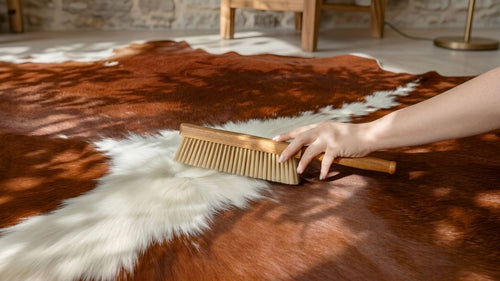
Lift the cowhide periodically to shake it out and let both layers air. Spot clean the cowhide with a barely-damp cloth and mild soap for spills — blot, never rub. Rotate the entire layered setup every few months to distribute wear and sun exposure evenly. Lift the cowhide occasionally to check that no moisture is being trapped between the two layers, especially in humid climates.
Layer Up: The Floor Move That Makes Every Other Room Decision Easier

Here's what nobody tells you about Cowhide Rug Layering until you try it: once you do it once, you'll wonder why every rug you've ever owned was just sitting there by itself, doing all the work alone.
A layered floor setup creates warmth, depth, and visual complexity that changes the entire energy of a room — and it does it without painting a wall, buying new furniture, or hiring anyone. A quality base rug, a well-chosen cowhide from eCowhides, a slight diagonal angle, and you've got a floor that people walk into and immediately want to talk about.
Browse the full collection of eCowhides — natural shapes, patchwork, tricolor, brindle, and more. Find the hide that makes your base rug look like it was always waiting for it.