I want to make an honest argument. Not a sales pitch — an actual comparison, with the downsides acknowledged and the numbers laid out. Because the case for Cowhide Rugs over every other floor covering material is strong enough that it doesn't need spin. It just needs a fair hearing.
Most people buying rugs choose between wool, synthetic, jute, or shag — because those are the categories that dominate retail. Cowhide sits outside that conversation in most stores, which means most buyers never seriously consider it. That's the gap this post is designed to close.
Here's the honest comparison.
The Problem With Wool, Synthetic & Shag Rugs Nobody Talks About Enough

Every popular rug material has a story it tells about itself — and a story it doesn't tell. Here's what the marketing leaves out.
Wool rugs are sold on durability and natural fiber credentials. Both are partially true. Wool is the most durable fiber rug material available — but "durable" in fiber terms still means compression, pile matting, and visible wear paths in high-traffic zones within five to ten years. Wool also absorbs moisture, which creates a genuine mold and mildew risk in humid environments or after cleaning. And wool pile is one of the most effective allergen traps in residential use — dust mites, pet dander, and pollen embed deeply in the fiber structure and survive regular vacuuming. The Carpet Allergy research is clear on this.
Synthetic rugs — polypropylene, polyester, nylon — are the most honest category in the sense that they don't pretend to be something they're not. They're affordable, they come in every pattern imaginable, and they last a few years before the pile thins and the colors fade. What they don't advertise: they're manufactured from petroleum-based fibers that off-gas VOCs — volatile organic compounds that affect indoor air quality, particularly in new rugs and in the first months of ownership. They also shed microplastics with every step and every vacuum pass. The Rug Materials to Avoid guide makes this case compellingly.
Shag rugs are almost entirely a visual choice — the deep pile creates a look that photographs beautifully and feels luxurious underfoot for about six months. After that, the pile tangles, mats, and starts to look like something lived through a season it wasn't designed for. Shag is also the worst-performing material in any cleaning scenario: the long fibers trap everything and release nothing. Spills become buried. Pet hair becomes structural. Vacuuming creates as many problems as it solves by tangling the pile further.
Jute and sisal are the natural fiber alternatives that get positioned as the sustainable choice. They have real advantages — biodegradable, renewable, no synthetic off-gassing. But they absorb moisture readily (a genuine mold risk), scratch bare feet, and have a lifespan in high-traffic areas that rarely exceeds five to seven years before visible degradation. The Environmental Impact of Carpet Cleaning Chemicals required to maintain natural fiber rugs is also worth factoring into the sustainability equation.
"The rug industry has gotten very good at marketing around failure modes. Every material has them — the question is whether the manufacturer acknowledges them or buries them. Cowhide is one of the few materials where the performance story and the marketing story are actually the same story." — Diane Forsythe, Material Consultant & Textile Specialist, Portland OR
Why Cowhide Cleans in Seconds While Every Other Rug Holds a Grudge

Cleaning is where the real-life difference between cowhide and every fiber alternative becomes impossible to ignore. Not in the spec sheet — in the moment a glass of red wine tips over at 9pm on a Tuesday and you're deciding whether tonight becomes a problem or a non-event.
Fiber rugs — wool, synthetic, jute, cotton — are porous. Every spill that hits the surface starts moving immediately: down through the pile, past the backing, toward the floor underneath. The response window is short and the margin for error is narrow. Blot too late, rub instead of pressing, use the wrong cleaning product — and the stain is permanent. Wool especially absorbs moisture fast and holds it, creating both a staining problem and a mold risk if the backing doesn't dry fully. Shag is worse: the deep pile buries spills before you've finished reacting to them.
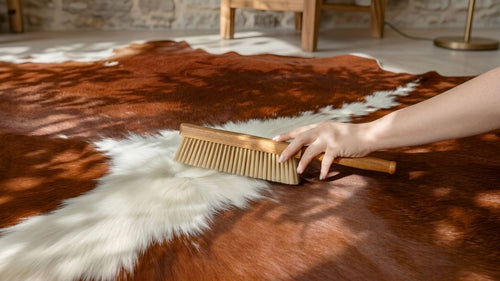
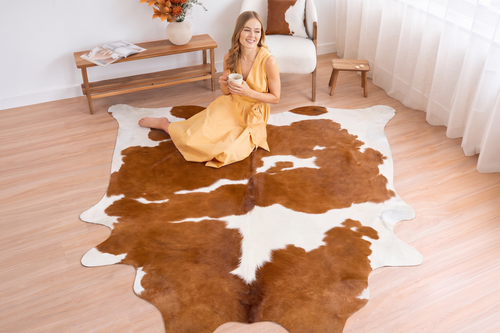
A Genuine Cowhide Rug is non-porous. Spills bead on the surface and sit there, waiting. You press a dry cloth into it, lift, repeat — and it's gone. No soaking in, no stain setting, no emergency. The BHG Cowhide Cleaning Guide and the eCowhides Cleaning and Care Guide both confirm what cowhide owners already know from experience: cleanup takes seconds, not sessions. No professional cleaning cycles. No annual service appointments. No damage assessments after a party. Just a shake-out weekly and a wipe when something spills — and the Environmental Impact of Carpet Cleaning Chemicals you're not using is a bonus.
|
Material |
Compression Resistance |
Spill Resistance |
Avg. Lifespan (High Traffic) |
|
Excellent — hair anchored in leather, no pile to flatten |
Excellent — non-porous surface, beads on top |
20–30+ years |
|
|
Wool |
Good — best fiber option, still compresses over time |
Poor — absorbs moisture, stains set quickly |
3–5 years |
|
Polypropylene / Synthetic |
Moderate — thins and mats under sustained traffic |
Moderate — resists some moisture, still stains |
2–4 years |
|
Jute / Sisal |
Poor — fibers break down and scratch with wear |
Poor — absorbs moisture readily, mold risk |
2–3 years |
|
Shag |
Very poor — pile tangles and mats within months |
Very poor — deep pile traps everything |
1–2 years |
|
Cotton Flatweave |
Poor — thin construction shows wear quickly |
Very poor — absorbs immediately |
1–2 years |
The aging dynamic is also worth understanding. Fiber rugs degrade — they go from new to worn. A cowhide develops character. The leather backing becomes more supple with age. The hair surface settles and softens in a way that makes the piece feel more itself over time. The Cowhide Durability Guide documents what 20-year ownership actually looks like — and it's not what most people expect from a floor covering.
The Health Angle: Allergens, VOCs & Why What's Under Your Feet Matters

This is the part of the rug conversation that almost never gets discussed at the point of sale — and it's the part that affects your home the most over time.
Allergen trapping in fiber rugs. Woven pile rugs — wool, synthetic, cotton, shag — are allergen reservoirs. The fiber structure creates the ideal microenvironment for dust mites: warm, textured, with plenty of organic debris (skin cells, food particles) to feed on. A fiber rug in a bedroom or living room that hasn't been deep-cleaned recently contains dust mite populations that vacuuming doesn't meaningfully reduce. Carpet allergy symptoms — sneezing, congestion, itchy eyes — are frequently traced to exactly this source. The Indoor Environmental Quality research on soft floor coverings and respiratory health is consistent and unambiguous.
VOCs from synthetic rugs. New synthetic rugs off-gas volatile organic compounds — primarily from the backing adhesives, dyes, and fiber treatments used in manufacturing. The "new rug smell" is VOC off-gassing. In a well-ventilated space it dissipates within weeks to months. In a bedroom or tightly sealed room, the concentration can remain elevated significantly longer. The EPA's VOC guidance makes the indoor air quality implications clear.
Cowhide's health profile. The non-porous hair-on-hide surface of a genuine cowhide doesn't provide the embedded environment allergens need to accumulate. Dust mites require fiber depth and moisture — neither of which cowhide offers. Pet dander and pollen sit on the surface rather than embedding in it. The Allergy-Free Cowhide page covers the full clinical picture. No VOC off-gassing — cowhide is a natural product with no petroleum-based components or synthetic adhesive backing. The Leather Working Group (LWG) standards that eCowhides' production partners meet include environmental and chemical compliance at the tannery level.
For households with children, allergy sufferers, or pets — the groups most affected by indoor air quality — the health difference between a fiber rug and a natural cowhide is not marginal. It's structural, and it compounds over the years the rug is in the home.
"I've been recommending cowhide over synthetic and wool alternatives for clients with respiratory sensitivities for years. The non-porous surface is a meaningful clinical distinction — not a marketing claim. The difference in household allergen load between a fiber rug and a natural hide in the same room is measurable." — Patricia Osei, Interior Designer & Wellness Space Consultant, New York NY
Cost Per Year: Why a Cowhide Rug Is the Smartest Long-Term Investment

The sticker price comparison between a cowhide rug and a synthetic alternative almost never tells the real story. The number that matters is cost per year — what you actually pay, annualized over the life of the piece.
Here's how the math works with real numbers:
|
Material |
Typical Purchase Price |
Avg. Lifespan |
Annual Cleaning Cost |
Cost Per Year |
|
$300–$600 |
25+ years |
$0 (shake & wipe) |
$12–$24/year |
|
|
Wool |
$400–$900 |
3–5 years |
$80–$150/year (professional) |
$160–$330/year |
|
Polypropylene |
$150–$400 |
2–4 years |
$40–$80/year |
$118–$280/year |
|
Jute / Sisal |
$200–$500 |
2–3 years |
$60–$100/year |
$160–$267/year |
|
Shag |
$200–$500 |
1–2 years |
$60–$120/year |
$260–$620/year |
The cowhide number is not a typo. At $12–$24 per year over a 25-year lifespan with zero professional cleaning costs — because a shake-out and a wipe are genuinely all the maintenance required — cowhide is the most cost-efficient floor covering available when measured correctly. The Environmental Impact of Discarded Materials research also makes the replacement-cycle cost visible in a different way: every rug you don't replace is waste that doesn't go to a landfill.
The cleaning cost differential is real and significant. Wool rugs in high-traffic zones typically require professional cleaning once or twice a year to maintain their appearance and manage allergen load — that's $80–$150 per year on top of the purchase price, every year, for the life of the rug. Cowhide requires a periodic shake-out and the occasional damp cloth. The eCowhides Cleaning and Care Guide covers the full protocol — and it's genuinely short.
The Real Reason People Switch to Cowhide and Never Go Back

I've talked to a lot of cowhide rug owners. And the reason they give for never going back to fiber rugs is almost never the durability statistics or the allergen research — even though both of those things are real. The reason is simpler than that.
It's that cowhide stops being something they think about. The fiber rug was something they thought about — the stain in the corner, the matted spot by the coffee table, the cleaning appointment they kept meaning to schedule, the moment they realized it needed to be replaced. The cowhide just exists. It looks good. It handles whatever gets spilled on it. It doesn't require attention or maintenance cycles or periodic anxiety about how it's holding up.
That's the real value proposition — not a number, not a statistic. It's the removal of a low-grade, recurring mental load that most rug owners don't even realize they're carrying until it's gone.
There are legitimate reasons not to choose cowhide. If you want a very specific pattern that natural hide can't produce — a flat geometric print, a solid color across a large area — then a manufactured rug is the right choice. If budget is the primary constraint and you need the lowest possible upfront cost, a synthetic rug makes sense. If you have a philosophical objection to animal-derived materials, that's a valid position — the Ethical Sourcing context is worth reading before making that call, but the objection is legitimate.
For everyone else — for the person who wants the best floor covering for their actual life, their actual home, their actual budget over time — the comparison doesn't really stay competitive past the first honest look. The Why Real Beats Faux post covers one dimension of this. The full collection at eCowhides covers the rest.
"Every client I've moved from a fiber rug to a cowhide has said some version of the same thing six months later: I don't think about it anymore. That's the goal. A floor covering that handles its job so well it disappears from your mental inventory. Cowhide does that better than anything else I've specified." — James Calloway, Principal Designer, Calloway Studio, Chicago IL
FAQ: Honest Comparison Edition

Is Cowhide More Durable Than Wool?
Yes — by a significant margin in high-traffic zones. Wool is the most durable fiber rug material, but it still compresses and develops wear paths under sustained foot traffic within 8–15 years. A Natural Cowhide Rug doesn't have a pile to compress — the hair is anchored directly in the leather backing and maintains its structure under the same conditions for 20–30+ years. The Cowhide Durability Guide documents long-term ownership in detail.
Do Synthetic Rugs Off-Gas VOCs?
Yes — synthetic rugs manufactured from polypropylene, polyester, or nylon off-gas volatile organic compounds from backing adhesives, dyes, and fiber treatments. The concentration is highest when the rug is new and dissipates over weeks to months in well-ventilated spaces. The EPA's VOC guidance covers the indoor air quality implications. Natural cowhide contains no synthetic components and produces no VOC off-gassing.
Are Cowhide Rugs Better For Allergies Than Fiber Rugs?
Yes — the non-porous hair-on-hide surface of a Cowhide Rug doesn't provide the embedded environment that dust mites, pet dander, and pollen need to accumulate. Fiber rugs — especially wool and shag — trap allergens at depth where vacuuming can't reach. The Allergy-Free Cowhide page covers the clinical picture in full.
How Does Cowhide Compare to Jute or Sisal?
Jute and sisal have legitimate sustainability advantages — they're renewable, biodegradable, and off-gas nothing. But they absorb moisture readily (creating mold risk in humid environments or after cleaning), scratch bare feet, and degrade under high-traffic conditions in 4–8 years. Cowhide matches the natural material credentials while outperforming on spill resistance, durability, and allergen management. Both are better than synthetic alternatives.
What Is the Real Cost Per Year of a Cowhide Rug?
At a purchase price of $300–$600 and a lifespan of 25+ years with zero professional cleaning costs, a Natural Cowhide Rug costs approximately $12–$24 per year — making it the most cost-efficient floor covering available when measured correctly. Wool rugs with annual professional cleaning run $120–$240 per year. Synthetic rugs replaced every five years run $70–$160 per year.
Why Do People Never Go Back to Fiber Rugs After Switching to Cowhide?
The most common reason is the absence of maintenance anxiety. A Genuine Cowhide Rug handles spills, foot traffic, pets, and daily use without requiring the mental overhead that fiber rugs generate — the stain concerns, the cleaning cycles, the wear monitoring. Owners describe it as a floor covering that disappears from their mental inventory. Once you've experienced that, returning to the maintenance demands of fiber rugs feels like a step backward.
Is Cowhide Better Than Synthetic Rugs for Pets?
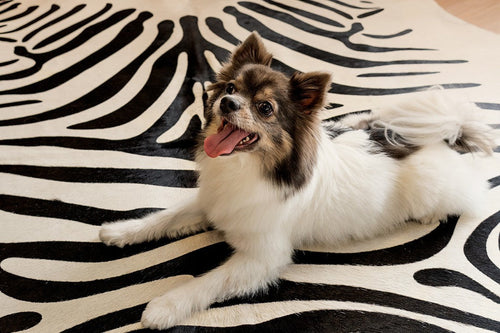
Significantly. Pet hair doesn't embed in the hair-on-hide surface the way it does in fiber pile — it sits on top and brushes off easily. The non-porous surface doesn't trap pet dander or amplify allergens. Pet accidents clean up before penetrating to the backing if addressed promptly. The Pet-Friendly Homes Guide covers every scenario.
What Are the Downsides of Cowhide Rugs Compared to Fiber?
Honest answer: cowhide can't produce flat geometric prints or large solid-color fields the way manufactured rugs can. The natural shape of each hide is irregular — it won't fit a room like a perfectly rectangular rug. And the upfront cost is higher than budget synthetic options. If any of those are dealbreakers for a specific application, a fiber rug is the right choice. For everything else, cowhide wins the comparison.
How Long Does a Cowhide Rug Last Compared to Wool?
A quality Cowhide Rug lasts 20–30+ years with basic care. A quality wool rug in the same high-traffic zone typically lasts 8–15 years before visible compression and wear become significant. The difference compounds further when you factor in that cowhide improves with age — developing character rather than degrading — while wool reaches a peak and then declines.
Is Cowhide a Sustainable Rug Choice?
Yes — every hide at eCowhides is a Byproduct of the Meat Industry, meaning the animal was not raised for its hide. It's a repurposing of material that would otherwise be discarded. Production partners meet Leather Working Group (LWG) environmental standards. And a 25-year lifespan with no replacement cycle means significantly less floor covering waste over time. The full Ethical Sourcing picture is covered at eCowhides.
The Comparison Isn't Really Close — Once You Run the Full Numbers

Wool lasts longer than synthetic. Jute is more sustainable than polypropylene. Shag photographs better than it performs. These are all true statements about the alternatives. But none of them change the fundamental comparison: on durability, health, cost per year, and the lived experience of ownership, natural cowhide outperforms every other rug material available.
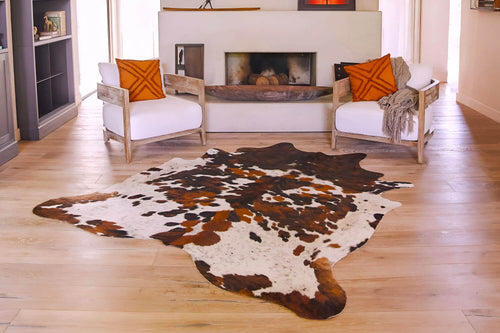
The Brindle Cowhide Rugs, Tricolor Cowhide Rugs, Black and White Cowhide Rugs, and the full collection of Natural Hide Rugs at eCowhides.com are waiting. Browse the collection and find the one that belongs in your home — for the next twenty-five years.