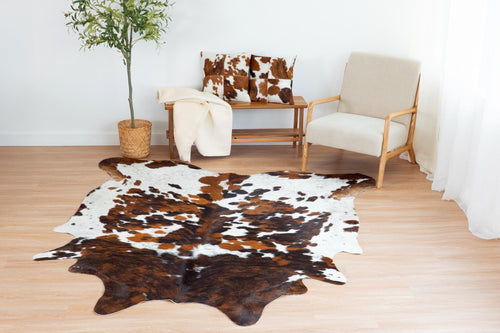
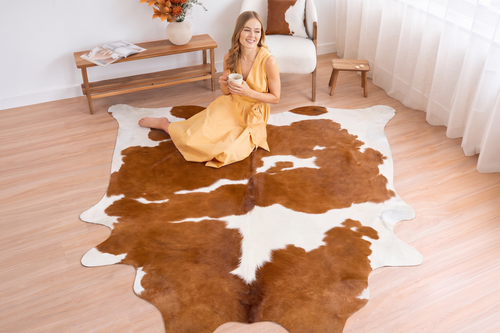
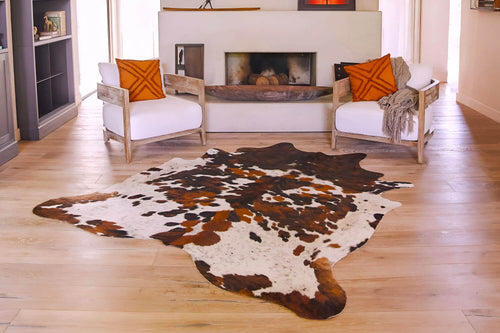
I've seen a lot of rugs come and go. Wool rugs that pilled within a year. Synthetic ones that flattened under a sofa and never recovered. A jute rug that looked incredible in the store photo and shed all over the floor for six months straight. And then I put down a Genuine Handcrafted Cowhide Rug — and honestly, the comparison stopped being fair pretty quickly.
That's not a sales pitch. That's just what happens when you put a natural, artisan-made material up against something factory-produced and designed to a price point. The difference shows up fast, and it keeps showing up for years.
This post lays it all out honestly — the process, the price, the durability, the maintenance, and the moments where other rug types might actually make more sense. Because a good comparison is a fair one, and we're confident enough in what we sell to have that conversation openly.
What "Full-Grain vs. Split-Grain" Cowhide Means — and Why It Completely Changes the Price Tag

Before you can compare Genuine Cowhide Rugs to anything else, you need to understand that not all cowhide is the same — and the difference starts at the hide itself.
A cow's skin has layers. The outermost layer — the one that includes the hair and the tightest, most densely packed leather beneath it — is called full-grain. This is the good stuff. It's the most durable part of the hide, the most natural, and the hardest to work with. A True Handcrafted Cowhide Rug uses the full-grain hide, hair on, with the natural markings and variations intact.
Split-grain is what you get when the hide is mechanically separated and the lower layers are used independently. It's cheaper to produce, more uniform in appearance, and significantly less durable. A lot of lower-priced "cowhide" products — and many faux versions — use split-grain or bonded leather materials that look similar at first glance but behave very differently over time.
The price difference between a Full-grain Artisan Cowhide Rug and a split-grain or synthetic alternative isn't arbitrary. It reflects the quality of the raw material, the skill required to work with it, and the lifespan you can realistically expect from the finished piece.
"Full-grain leather is the only layer of the hide that retains the original fiber structure. Everything below it is a compromise — it may look similar, but it will not perform the same way under real use conditions." — Daniel Hartley, Master Tanner and Hide Processing Specialist, San Antonio TX
The Tanning Process That Separates a Supple Cowhide Rug from One That Stiffens and Curls

The hide doesn't become a rug the moment it leaves the animal. What happens between the farm and your floor — the tanning process — is what determines whether your Natural Cowhide Area Rug stays supple and flat for a decade or stiffens, curls, and cracks within a few years.
There are two primary tanning methods used for Premium Cowhide Rugs:
Vegetable tanning is a traditional, plant-based process that produces firm, characterful leather with rich, warm tones that develop beautifully over time — making it a favorite for artisan craftsmanship.
Chrome tanning is a modern process that produces soft, supple leather with a consistent finish and excellent versatility — making it well-suited for a wide range of applications, including home décor.
What you want to avoid is poor-quality tanning at either end — hides rushed through the process to cut costs, or hides treated with harsh chemicals that degrade the leather fiber over time. This is where Brazilian Cowhide Rugs, which are tanned under strict quality controls in one of the world's most established hide-processing industries, consistently outperform cheaper imports.
The tanning quality is also why a Well-made Cowhide Rug lies flat naturally, resists edge curling, and stays soft underfoot — while a poorly tanned one fights you from day one.
Why Every Brand Mark, Scar, and Natural Variation in a Handcrafted Cowhide Rug Is a Feature, Not a Flaw

Here's where Handcrafted Cowhide Rugs diverge most sharply from every machine-made alternative — and it's a difference worth understanding before you shop.
A synthetic rug is designed to be perfect. Every fiber is identical. Every color is uniform. Every inch of the surface looks exactly like every other inch. That consistency is the point — it's how you make a product that looks the same whether it came off the line on a Tuesday or a Friday.
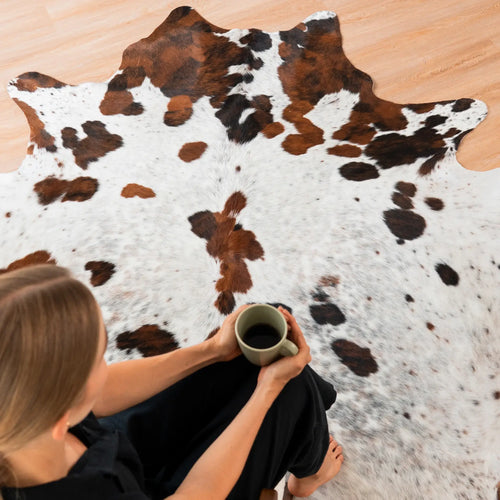
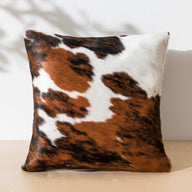
A Genuine Artisan Cowhide Rug is the opposite of that. The brand marks left by a fence or a tag. The slight color variation across the hide where the sun hit one flank more than the other. The natural asymmetry of the shape. These aren't defects that slipped through quality control — they're evidence that what you're looking at came from a real animal that lived a real life. They're the thing that makes your rug unrepeatable.
No two Unique Patterned Cowhide Rugs are identical. Ever. And in a world where everything is mass-produced and available in six colorways, that matters more than people initially realize.
"When clients ask me why their cowhide rug has a small mark or a slightly uneven edge, I tell them the same thing: that's the signature. A machine doesn't leave signatures. An animal does. And that's what you paid for." — Simone Adler, Interior Designer and Natural Materials Specialist, New York NY
How Skilled Artisans Repair Holes in Cowhide Rugs — and How to Tell If It Was Done Right
 This section might surprise you — but it's one of the most honest things I can share about Genuine Cowhide Rugs, and it's something the best sellers in this industry are transparent about.
Real Hides occasionally have small holes or thin spots. Animals get branded, scratched by wire, or marked by insects. On a Full-grain Hide, these areas are addressed by skilled craftspeople before the rug is finished — and the way it's done tells you a lot about the quality of what you're buying.
Good repair work involves patching from the suede side with a complementary piece of hide, secured cleanly so the hair side shows no visible disruption. From the top, you'd never know. The hair lays naturally, the patch doesn't create a ridge, and the structural integrity of the rug is fully maintained.
Poor repair work shows. The hair around the patch lays differently. There's a slight raised edge. The color of the patch hide doesn't quite match. These are signs of rushed craftsmanship or low-quality materials used to fill the gap.
The Cost-Per-Year Breakdown: Why a $188 Handcrafted Cowhide Rug Is Cheaper Than a $90 Synthetic

Let's talk about money, because this is where the comparison gets genuinely interesting.
A typical synthetic area rug in the $80–$120 price range has a realistic lifespan of one to two years under regular use. It pills, flattens, fades, and eventually gets replaced.
A Well-made Handcrafted Cowhide Rug in the $188–$400 range, properly cared for, lasts ten to fifteen years. Conservatively. Some last longer.
"The economics of natural materials always favor the long view. A hide rug maintained properly will outlast three or four synthetic replacements and still look more interesting than any of them did on day one." — Marcus Delaney, Sustainable Home Materials Consultant, Portland OR
One more thing the table doesn't capture: Cowhide Rug Hypoallergenic Properties. Unlike wool, jute, or synthetic fiber rugs, cowhide doesn't trap dust mites, pet dander, or allergens in fiber loops. It's a non-porous surface that wipes clean rather than absorbing. For families with allergies, that's a quality-of-life benefit that doesn't show up in the price comparison but absolutely shows up in daily living.
FAQ: Handcrafted Edition

What Makes Handcrafted Cowhide Rugs Different from Machine-Made Rugs?
Handmade Cowhide Rug Benefits start with the material itself — a genuine animal hide that no machine can replicate. Each rug is shaped, finished, and inspected by hand, meaning the quality control is personal rather than automated. The natural variation in pattern, color, and shape is something a machine-made rug is specifically designed to eliminate — which is exactly why a handcrafted hide feels so different underfoot and in person.
Are Cowhide Rugs More Durable Than Wool or Synthetic Rugs?
Yes, significantly — when you're comparing quality-to-quality. Cowhide Rug Durability comes from the dense, tightly packed fiber structure of the full-grain hide, which resists compression, pilling, and surface wear in ways that woven fibers simply can't match. A well-maintained cowhide rug will outlast most wool rugs and every synthetic option at a comparable price point.
How Do You Clean and Maintain a Cowhide Rug Compared to Other Rug Types?
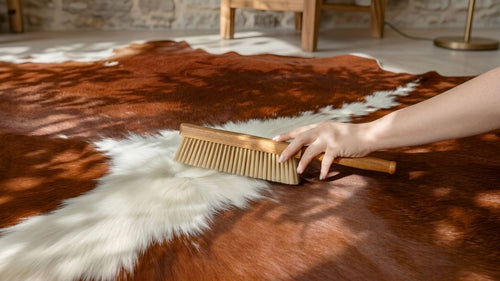
How to Clean a Genuine Cowhide Rug is simpler than most people expect. Shake it out regularly, blot spills immediately, and spot clean with a mild soap solution and a damp cloth. No steam cleaning, no soaking. Wool and synthetic rugs often require professional cleaning or machine washing — cowhide needs neither, which actually makes long-term maintenance easier and less expensive.
Are Cowhide Rugs Suitable for Homes with Pets and Children?
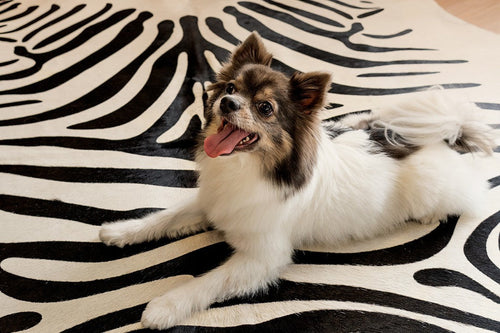
A Cowhide Rug Pet-Friendly Homes setup works better than most people expect. The non-porous surface doesn't trap pet hair or dander the way fiber rugs do, and most spills wipe clean quickly. Sharp pet claws can scratch the hair surface over time, so placing rugs in areas where pets run at full speed isn't ideal — but for everyday living, cowhide holds up remarkably well.
How Long Does a Genuine Handcrafted Cowhide Rug Last?
With basic care, a Quality Genuine Cowhide Rug lasts ten to fifteen years or more. The factors that affect lifespan most are foot traffic volume, exposure to direct sunlight, and how quickly spills are addressed. Rugs in low-to-medium traffic rooms regularly last well beyond the fifteen-year mark.
Are Cowhide Rugs Ethically Sourced and Environmentally Friendly?
Yes — when sourced responsibly. Ethically Sourced Cowhide Rugs are a byproduct of the beef industry, meaning the animal is not raised or harvested for its hide alone. Using the hide rather than discarding it is a more sustainable practice than manufacturing synthetic rugs from petroleum-based materials. Look for sellers who are transparent about their sourcing — at eCowhides, all hides are traceable to responsible suppliers.
How Does the Price of a Cowhide Rug Compare to Persian or Oriental Rugs?
Entry-level Cowhide Rug vs Persian Rug pricing is fairly comparable — both sit in the $300–$600 range for quality pieces. The difference is in character: a Persian rug offers intricate woven pattern work; a cowhide offers organic, unrepeatable natural variation. Both are long-term investments. The choice comes down to the aesthetic story you want your room to tell.
Do Cowhide Rugs Work with Modern, Bohemian, or Rustic Interior Design Styles?
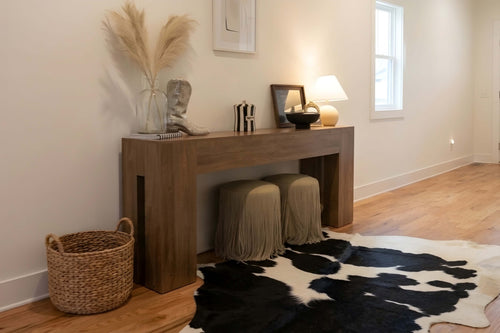
All three — and more. Cowhide Rug Rustic Interior Design is the most obvious pairing, but Natural Cowhide Area Rugs work just as naturally in contemporary, minimalist, transitional, and bohemian spaces. The organic pattern and neutral tones of most hides make them one of the most style-agnostic rugs you can buy.
The Rug That Outlasts Everything Else You've Ever Bought — and Looks Better Doing It

Here's the honest summary: every rug type has its place. Jute works on a screened porch. A soft shag belongs in a kids' playroom. A flat-weave cotton rug is a perfectly reasonable kitchen choice.
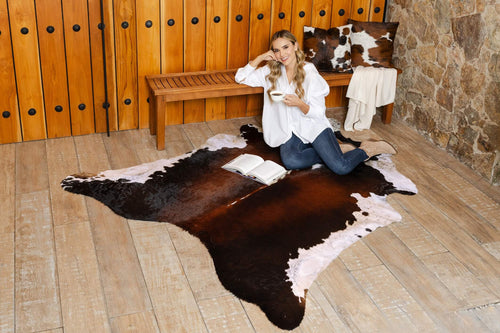
But for a living room, a bedroom, a dining room, a home office — anywhere you want a rug that looks genuinely exceptional, handles real life, and doesn't need replacing every few years — a Handcrafted Cowhide Rug is in a category of its own. The cost-per-year math works. The durability is real. The look is unrepeatable. And the longer you live with one, the more right the decision feels.
At eCowhides, every Premium Cowhide Rug is sourced from trusted suppliers, hand-selected for quality, and shipped directly to your door. Browse the full collection and find the one that belongs in your space — your floor has been waiting for an upgrade that actually lasts.
Ready to make the switch? Shop Genuine Cowhide Rugs at eCowhides.com and see the difference real craftsmanship makes.